
Beyond Slogans: Calibrating Your Palate Memory for Premium Chinese Tea
Strip away the marketing folklore. Learn how to build an unshakeable, defensible sensory baseline to evaluate premium leaves objectively using structural logic.
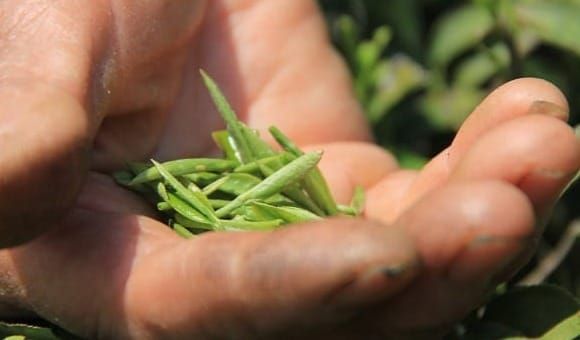
If you have spent time exploring specialty Chinese tea, you have likely run into an intellectual wall. You have memorized the six major categories, struggled to map which specific tea names belong where, and tried to decipher an endless maze of provinces, cities, and mountains on labels—all while noticing that different quality grades sound like entirely different teas.
Yet, when you sit down to drink, the gap between the seller’s presentation and the liquid in your cup makes you question your own palate. It means the current dialogue surrounding premium tea is completely off-ground.
How does the actual physical composition of the tea leaf relate to the romantic, artistic stories spun by brokers? How many names are truly enough to understand what a tea is supposed to taste like?
The truth is simple: you cannot learn a tea palate by reading copy. You learn it by drinking comparatively to calibrate an internal baseline expectancy.
Calibrating Baseline Expectancy: The Three-Tin Rule
When an uncalibrated drinker evaluates a tea, they often look for an aggressive, uniform industrial punch. If they buy three different tins of the exact same named tea from different vendors and find they all taste different, they default to confusion.
But comparative tasting isn't about expecting absolute consistency; it is about discovering the overall taste expectancy of that specific tea family.
- The Biluochun Example: If you taste three different packs of genuine pre-Qingming Biluochun side-by-side, each will have certain differences. However, your palate will quickly learn the absolute boundaries of the archetype: you will never find a genuine one that has an aggressive, heavy, long-lasting bold taste. Instead, you learn to recognize its natural, delicate subtlety, and if you are lucky, you will encounter one that yields an exceptionally sweet, throat-soothing finish.
- The Longjing Example: Across three variations of Longjing (Dragon Well), you will discover that despite variations in craftsmanship, you cannot find a single authentic batch that lacks a clean, savory, vegetal profile.
By tasting variations of the same grade comparatively, you confirm your own judgment. Once you are familiar with your own palate's baseline boundaries, you no longer need to rely on the tasting notes printed on the packaging.
2. The Vocabulary Paradox: Who Wrote Your Tasting Notes?
Western tea evaluation frequently relies on complex flavor wheels packed with descriptors like "marzipan," "wet stone," or "leather." But this framework presents a fascinating cultural paradox. A traditional Chinese tea drinker doesn't grow up eating marzipan—it is a culturally disconnected reference point.
Then you look at the descriptors on a tea label, the vocabulary immediately tells you who wrote them and whom they were written for:
| Western-Curated Descriptors (Written by/for Western Palates) |
Authentic Chinese Lineage Metrics (Grounded in Material & Craft) |
|---|---|
| ❌ Marzipan / Almond Paste | Vegetal Profile (Savory/Clean) |
| ❌ Leather / Tobacco | Brightness (Clarity of Liquid) |
| ❌ Apricot Jam / Cooked Fruits | Throat-Soothing Smoothness (Run 潤) |
| ❌ Wet Stone / Flint | Lingering Sweet Return (Hui Gan 回甘) |
Diagnostic Tip: The vocabulary choice on a label instantly identifies the author's cultural anchor and sensory baseline.
If a tasting note promises "marzipan," it was explicitly written by or for a Westerner to approximate an unfamiliar taste using Western culinary anchors. However, if the descriptors prioritize terms like brightness, vegetal quality, or throat-soothing smoothness (Run), you are looking at a profile grounded in the traditional Chinese lineage of tea evaluation.
This vocabulary split mirrors a deep, biological divide in taste perception driven by daily dietary baselines. Chinese consume sugar about 7kg per capital annually while UK and US are both 4 times more. Consider the sheer difference in sugar and diary conditioning:
If a writer downs a heavy, intensely bitter double espresso every morning or consumes highly sweet, dairy-heavy foods daily, their physical taste threshold is deeply desensitized. When they are handed a light, breezy, highly delicate pre-Qingming green tea, their palate will inevitably perceive it as "weak" or "watery." They are suffering from a taste mismatch. You must recognize your own daily dietary baseline before you can evaluate the true nature of a subtle, unadditive leaf.
3. The Leaf Anatomy of the "Three Musketeers"
To understand how a leaf performs in water, we must look at where its core water-soluble compounds—the "Three Musketeers"—physically live within the anatomy of the plant, and how they interact with heat:
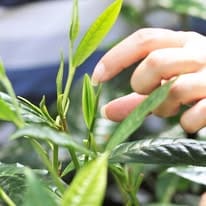
- L-Theanine (The Amino Acid): Concentrated heavily in the tender young buds to provide smooth, savory umami weight and cognitive calm. Crucially, L-Theanine is not temperature-sensitive. It dissolves effortlessly into water at almost any temperature—hot or cold.
- Caffeine (The Alkaloid): Also highly concentrated in young buds to provide sharp mental alertness. It extracts steadily across a wide thermal range.
- Catechins (The Polyphenols): These drive the bitterness, astringency, and structural grip of the liquor, and they are heavily concentrated in the matured lower leaves. Unlike amino acids, Catechins are highly temperature-sensitive—they require high thermal energy (90°C+) to be aggressively extracted into the water.
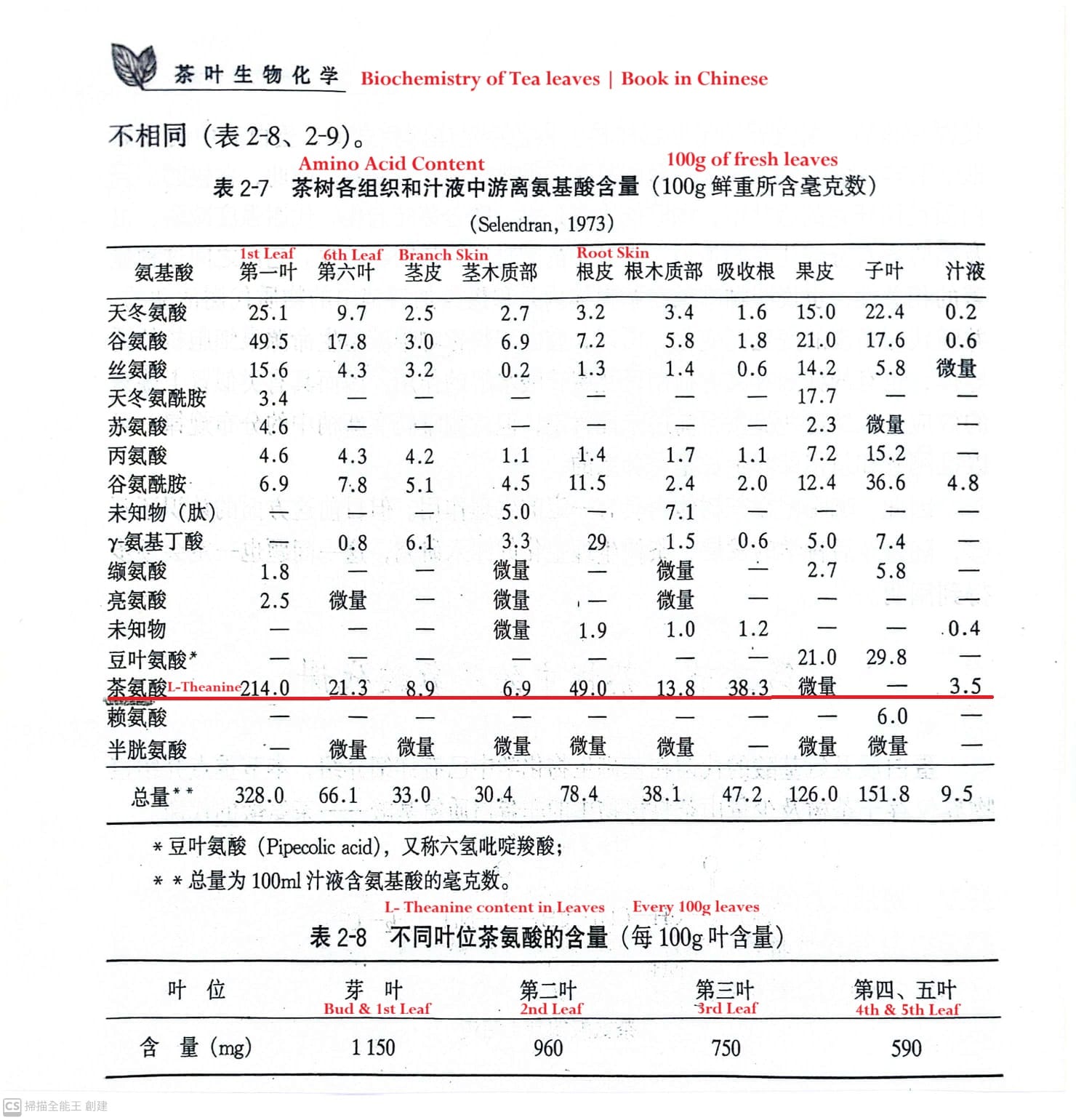
This chemistry reveals the secret of water temperature control. We don't brew delicate green teas at lower temperatures (60°C–70°C) to protect the L-Theanine; we do it as a defensive strategy. Because L-Theanine extracts easily in any water, using cooler water keeps the bitter, heat-sensitive catechins safely locked inside the lower leaves, allowing the pure, plush sweetness of the bud to take center stage.
This defensive strategy changes completely when brewing a high-bud black tea. Because oxidation has already transformed those bitter green catechins into Theaflavins (lively, refreshing briskness) and Thearubigins (large, heavy molecules that soften the body), lower water temperatures are no longer an operational necessity to avoid bitterness. The leaf simply doesn't have enough raw catechins left to punish you for using hot water. However, these new oxidized compounds remain highly heat-sensitive; if you hit the leaves with prolonged boiling water, the crisp, brisk theaflavins will break down entirely, leaving you with a duller, excessively heavy liquor.
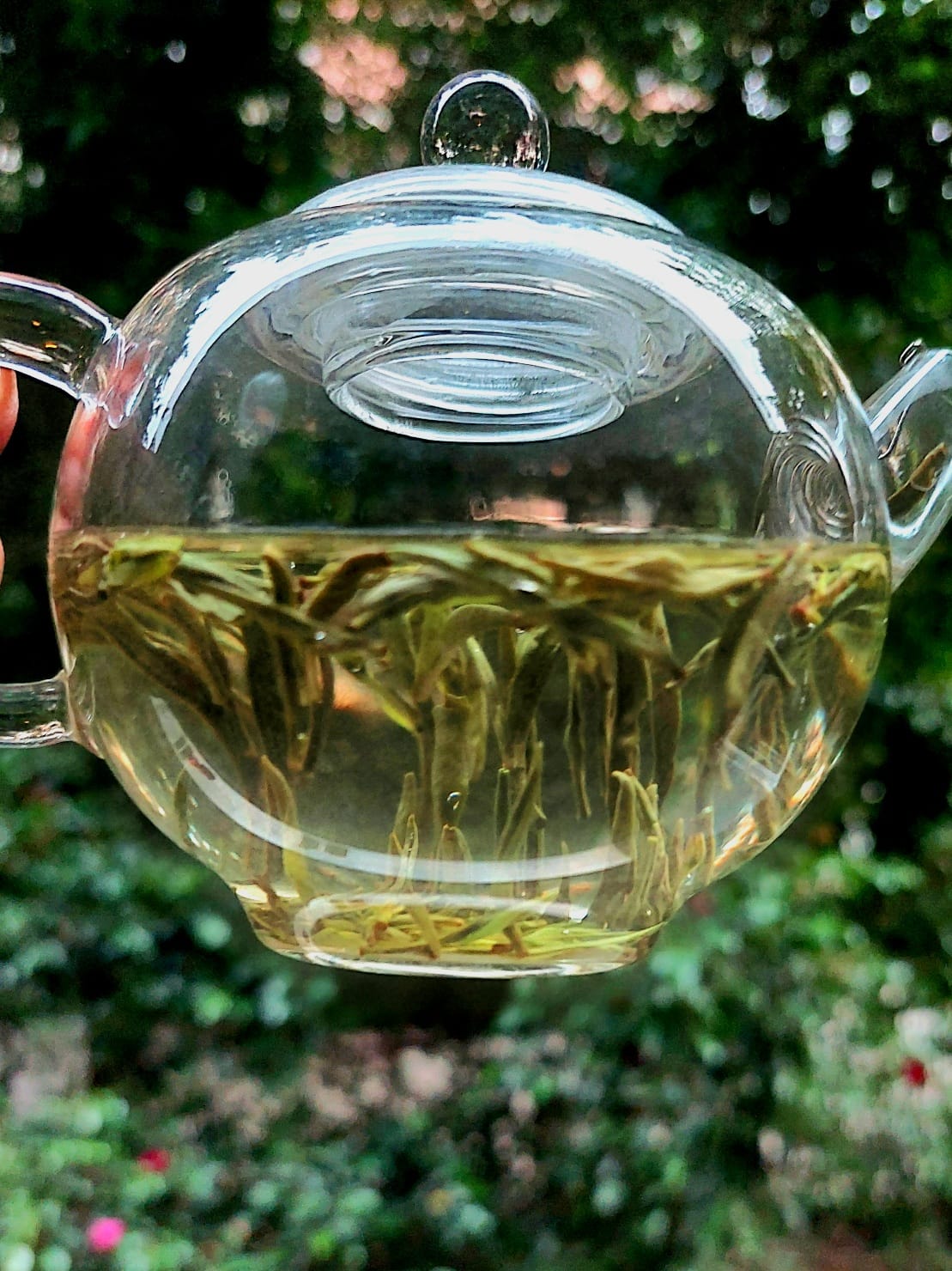
4. The Botanical Architecture: Direct Palate Challenges
To nurture your palate memory systematically, you must move past naming labels and challenge your mind with the raw botanical architecture of the plant through side-by-side comparisons:
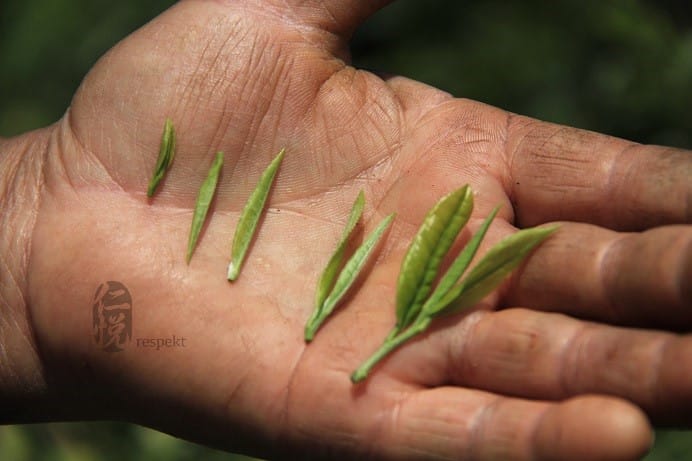
- Challenge 1: The Bud-to-Leaf Ratio (Material Anatomy) Compare a 1-bud-1-leaf plucking against a 1-bud-2-to-3-leaves plucking from the same variety. Your palate is learning to isolate the physical shift between the plush, smooth, amino-heavy density of the bud and the sharp, high-polyphenol catechin bitterness of the lower leaves.
- Challenge 2: The 500-Meter Altitude Delta (Micro-Climate) Taste two same tea cultivars grown on the same mountain but at a 500-meter altitude difference. Higher elevations introduce cold stress, forcing the buds to grow very slowly. This slow growth packs the cells with concentrated L-theanine before harvest, giving the high-altitude cup an uncopyable structural thickness and deep throat resonance (Hui Gan).
- Challenge 3: Same-Plant Processing Shift (Genetic Signature) Taste the exact same harvest lot processed as a raw White tea versus a fully oxidized Black tea. Your objective is to look past the surface processing style and train your memory to find the permanent, underlying genetic signature of the shared plant material.
5. The Kettle Catalyst: Strict Measurement Experiments
If you are not lucky enough to have traceably sourced teas for a side-by-side comparison right now, don't worry. Simply pick the best loose tea currently in your pantry to observe these physical extraction dynamics firsthand.
Before you judge any tea, always give the leaf at least three chances by purposefully altering your brewing variations. Use this simple water temperature experiment to watch the same leaf change masks:
- Brew 1 (The Amino Showcase): Brew your leaf with water cooled down to 65°C–75°C. Because L-Theanine extracts easily while catechins stay behind, this cup will reveal the maximum sweetness, silkiness, and delicate potential of your material.
- Brew 2 (The Thermal Stress Test): Hit the identical leaves with roaring, boiling water at 80°C–100°C. This violent thermal energy forces the immediate release of bound catechins and caffeine, testing the leaf’s absolute bitterness threshold and material strength.
The 10-Second Time Delta Experiment
Keep the water volume, leaf weight, and temperature identical, but alter your infusion duration by exactly 10 seconds to watch the extraction velocity unfold for you brew 3. Recommend to do 20-30 seconds first, then you can add on. To eliminate human error, your physical execution must follow this strict sequence:
[Step 1: Leaf in Pot] ➔ [Step 2: Start Timer] ➔ [Step 3: Pour Hot Water] ➔ [Step 4: Absolute Decant] ➔ [Step 2: Stop Timer]
By actively tracking the exact moment the plush, smooth amino sweetness shifts into a heavier structural grip, you learn to read the extraction speed of the leaf.
Once you see how easily you can manipulate the Three Musketeers with just a single tea in your pantry, the curiosity to tackle the 3 Botanical Architecture Challenges naturally follows. Isolating altitude deltas or plucking standards ceases to be a theoretical exercise; it becomes a game of sensory calibration.
Our own thoughts on how to structure these architectural challenges eventually became the blueprint for our Teativity framework—designed specifically to train palate memory and help anyone master these complex extraction dynamics. Tracking your palate’s progress and building that mental archive is deeply satisfying, especially when you share the experience and compare notes with other tea enthusiasts. It is exactly this shared passion for discovery that turns casual drinkers into loyal guests who return to a tea space week after week for a different, premium tea experience.
Teativity™ & CollaborationHowever, translating this infectious curiosity into a functional business model brings its own set of structural hurdles.
6. Managing the Retail Floor: A Minimalist Solution for Owners
If you are a tea house owner or hospitality operator, you face a distinct operational challenge: maintaining this high-level service consistency in an environment with frequent staff turnover.
While relying on short-term floor staff might not always be avoidable, you absolutely cannot gamble your daily brand consistency on their level of training. Instead, the solution is to empower your customers to handle the final brewing process properly with your structural support, ensuring no mistaken technique or careless parameters ruin the premium taste of your inventory.
You achieve this by establishing two non-negotiable operational keys that remove staff error entirely:
By keeping the text minimal and relying on a structured hardware configuration paired with clear customer instruction cards, your senior team maintains the system, your junior staff effortlessly executes the setup, and your customers enjoy a flawless extraction every single time.
Tea House Operations & Consistency Framework
Facing operational headaches with staff training, extraction parameters, and menu consistency? Access our complete library of operational blueprints, floor protocols, and hardware configurations designed to eliminate staff error and maintain flawless extractions across your team.
Access Chinese Tea Logic Club →The Knowledge Archive
Explore our complete collection of systematic tea research, historical translations, and extraction physics: Clarity without Ceremony →