
Why Does My Upscale Pre-Qingming (Mingqian / 明前) Green Tea Taste Like Flat Water?
Stop ruining delicate spring green teas with thermal shock. Learn the exact extraction chemistry, temperature ceilings, and flash-decant protocols.
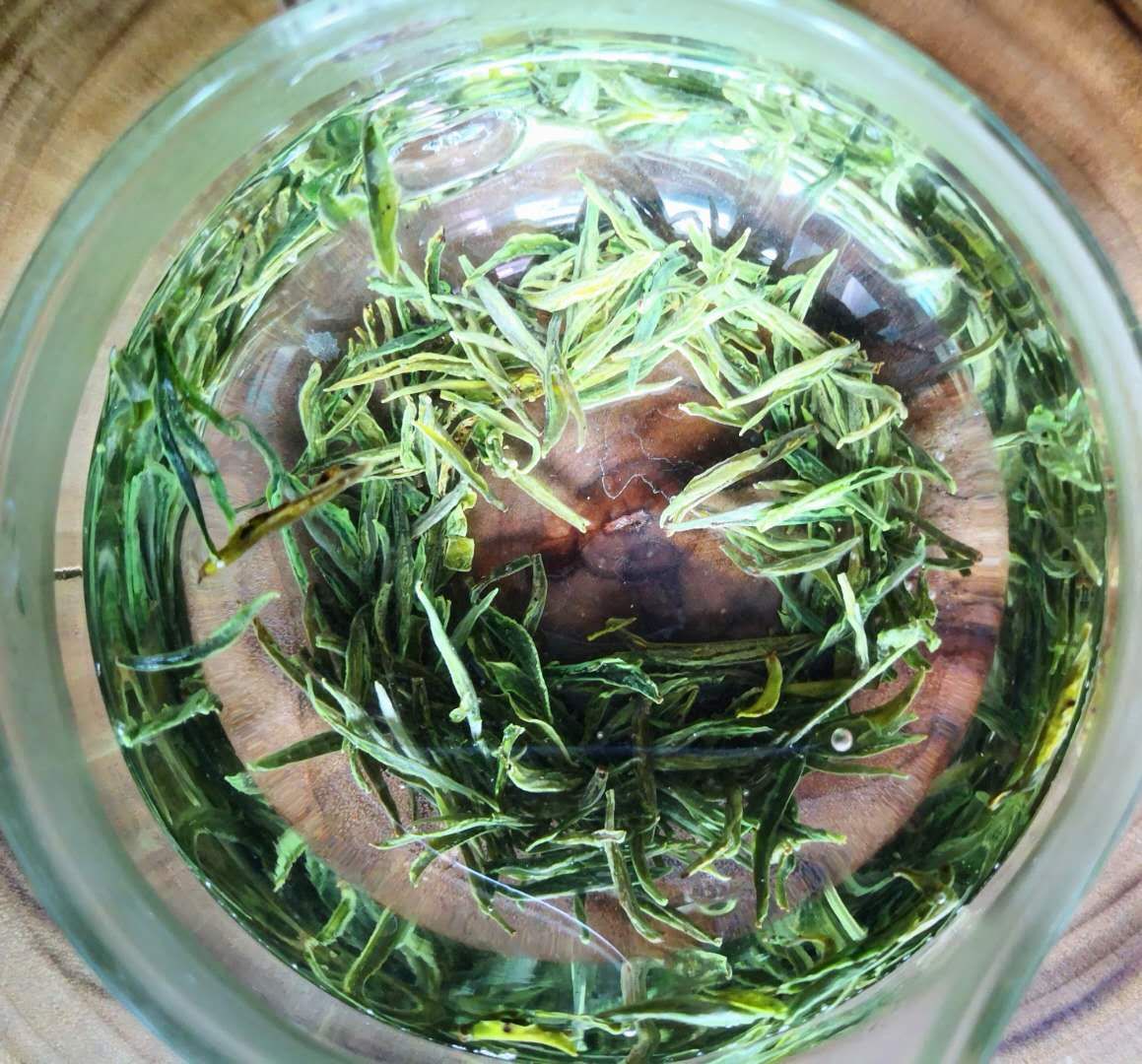
Storage Physics, Premature Harvest Risks, and Extraction Rules—A Seasonal Manifesto for Serious Drinkers
If you monitor online tea communities or spend enough time talking to guests on a physical tea house floor, a recurring, deeply anxious wave of sensory confusion surfaces every single year. It almost always boils down to variations of the exact same questions:
"Why did my favorite spring Longjing completely lose its orchid note after just a few months? It suddenly tastes like flat water."
"How late in the year is it actually safe to buy premium Chinese green tea online or from a local shop?"
"I paid premium capital for a high-bud-ratio Pre-Qingming lot, but it tastes completely empty—either totally flat or aggressively bitter and astringent."
Online, the immediate reaction is consumer paranoia: "I got scammed. The vendor sent me a pristine 5g sample pack from the fresh spring flush to hook me, but dumped last year's dead, stale inventory into my bulk order to clear their shelves." On the retail floor, premium-paying customers simply frown, assume your quality has dropped, and silently disengage.
These are not isolated incidents, and they are rarely simple product scams. They reflect a complex intersection of structural realities unique to premium green tea: agricultural vulnerabilities, cold-chain physics, execution errors during brewing, and invisible blind spots in our own palate calibration.
To fix the cup, we have to stop guessing and separate systemic environmental physics from actual agricultural manipulation.
Act I: The Diagnostic Framework (Physics vs. Fraud)
When serious drinkers approach me with a cup that has gone flat, they are looking for a quick remote diagnosis. But the reality is that a visually elite appearance—thousands of tiny, downy, intact trichomes, a vibrant jade-green hue, and a perfect 1-bud-1-leaf ratio—provides only partial data. A lot can look flawless under a display light and still deliver empty, hollow dishwater in the cup.
1. The Actual Scam: The Illusion of "Earliest"
The most sophisticated fraud in the modern spring tea market does not happen in a shady warehouse; it happens at the pruning shears.
Driven by market greed to capture the immense financial premiums commanded by the year's "first flush," some farms intentionally manipulate their plants to produce buds unnaturally early. They pick premature growth before the plant’s root system has had the necessary time to absorb deep soil nutrients or build biochemical density over the dormant winter months.
You think you are buying an elite, exclusive Pre-Qingming miracle because of its impossibly delicate bud ratio. In reality, you have bought a chemically hollow leaf that lacks structural stamina. It may carry a fleeting, fragile aroma in April, but because it lacks real amino acid density, its volatile aromatic compounds flatten into absolute nothingness the moment ambient storage temperatures fluctuate. Furthermore, if a farm experiences heavy order backlogs and forces a harvest during a rainy day, the resulting leaves arrive inherently waterlogged and structurally prime for a rapid flavor crash.
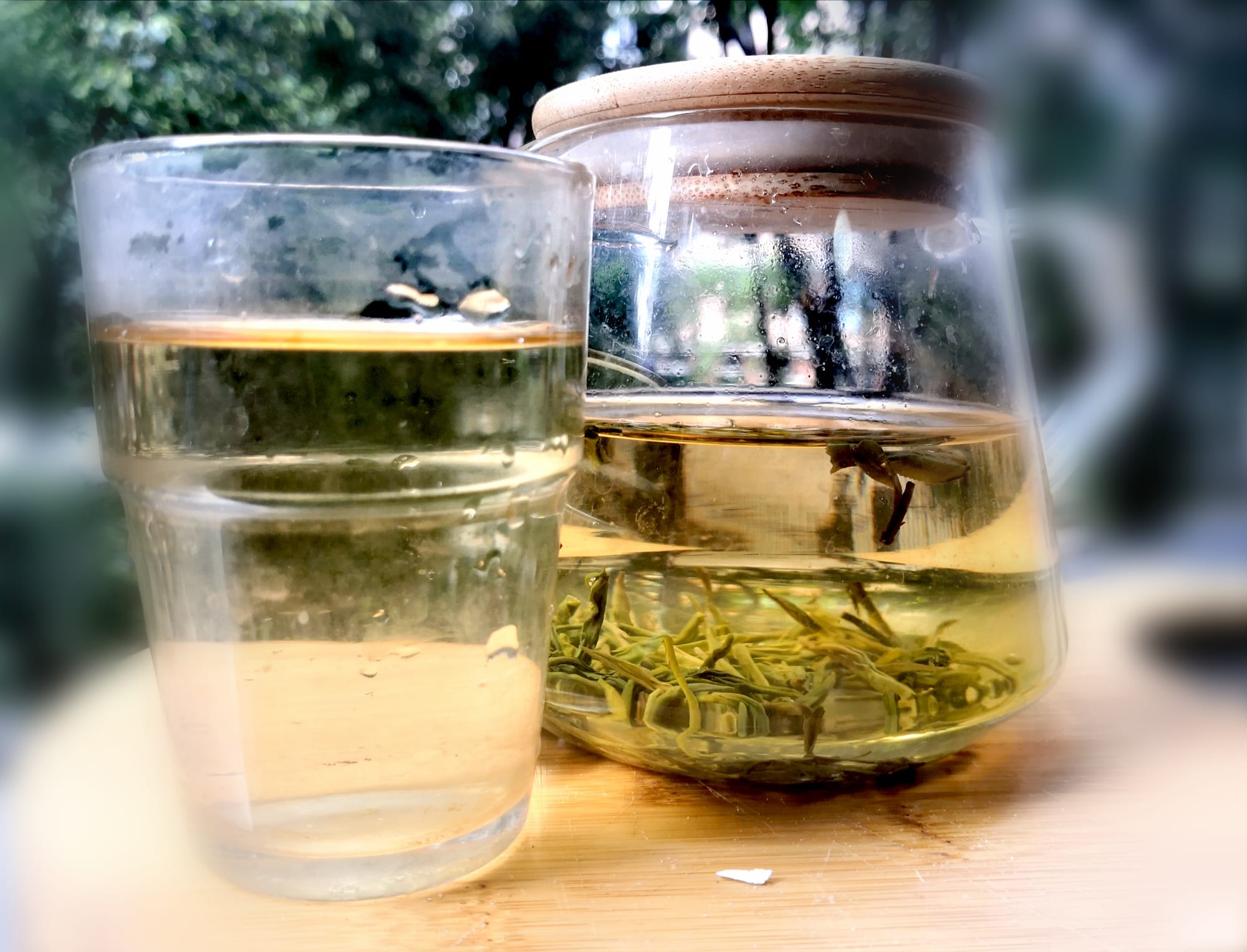
2. The Cold Brew Audit (The Ultimate Litmus Test)
If you want to know whether your supplier sold you a nutrient-dense spring harvest or a hollow, forced-growth fake, strip away the hot water entirely.
Take a few grams of the dry leaf and steep them in room-temperature or chilled water for several hours. Cold water completely changes the extraction dynamics, isolating the tea's natural amino acid backbone while keeping bitter catechins firmly locked inside the leaf structure.
A true, high-quality spring harvest will reveal its L-theanine purity through a remarkably thick, sweet, naturally umami liquor. If your cold brew audit yields a thin, characterless, completely flat water profile, the leaf never possessed structural substance to begin with. No level of brewing skill can extract flavor that was never there.
Act II: The Logistics of the Fading Leaf
If the tea passes the cold brew audit on day one but crashes a few months later, we are no longer looking at agricultural fraud. We are looking at the unforgiving physics of green tea storage.
Green tea’s entire culinary and cultural value lies in its unoxidized purity. Unlike oolongs or black teas, its leaves have not been structurally transformed to resist the elements. Because of this, it is highly susceptible to non-enzymatic oxidation (autoxidation)—the quiet, ambient degradation caused by exposure to oxygen, heat, and moisture.
Let’s be blunt: there is no true cold chain for boutique, artisanal tea. From the moment your delicate leaves leave the micro-climate of a mountain farm, they sit in local processing sheds, endure ambient heat at shipping hubs, and cross continents in standard cargo environments before they ever touch a retail counter or your kitchen table.
The good news? The leaf is tougher than modern alarmists claim. Unless the tea encounters extreme heat spikes above 40°C, a standard ambient transport temperature under 25°C inside a properly sealed, light-proof Mylar or aluminum vacuum bag will not cause a sudden, catastrophic chemical crash.
To put this in perspective, our modern tea-drinking experience is incredibly privileged. In the 19th century, Chinese tea traveled for 18 to 24 months via wooden sailing ships and grueling overland routes to reach European royal palaces. It traveled without plastic liners or modern oxygen absorbers, yet the historical flavor profiles captivated the world.
The Internal Chemical Shift
However, time always extracts a toll. When a leaf sits at ambient room temperature, an inevitable chemical countdown begins:
- Caffeine: Highly resilient and stable. Its ring structure resists thermal degradation, keeping the structural potential for bitterness constant.
- L-Theanine: Degrades steadily. Higher temperatures accelerate the loss of these amino acids, causing the fresh, savory, brothy umami sweetness to quietly fade out.
- Catechins: In warm, humid environments, catechins plummet and alter. The sharp, frontal, grassy bitterness begins to drop away.
Interestingly, this exact autoxidation is highly favorable for teas meant to be aged. It is the very mechanism that transforms fresh, bitter leaves into deep, woody aged Pu-erh over decades. But in a green tea, it simply flattens the profile into a gentle, uninspired middle ground.
If you open your mind and interact with the leaves, you realize the infusion will naturally carry different profiles as it ages. It is up to your individual tastebuds to determine whether you enjoy that mellowed development—there is no rigid, objective line between "good" or "bad" tea when natural chemistry shifts.
🏷️ The Day-One Protocol
To eliminate guesswork, always brew a baseline infusion the exact day your package arrives. If it tastes vibrant on day one but flat a month later, the failure belongs entirely to your post-arrival environmental management. Storing a premium green tea at room temperature all summer and panic-freezing it in October is an exercise in futility. Cold storage preserves current chemical states; it does not resurrect dead leaves. For optimal preservation, store your stock immediately at 0 to 4°C, keeping relative humidity less than or equal to 60%, and leaf moisture below 6 to 7%.
Act III: The Master Extraction Rules
When a serious drinker complains that an upscale tea tastes like flat water or bitter grass, the single most common culprit is thermal shock. If you take a delicate, high-bud-ratio, 1-bud-1-leaf green tea and hit it with water straight from a roaring 85°C to 100°C commercial water tower or boiling kettle, you are cooking the leaf alive.
High-temperature water violently destroys the fragile, top-note volatile aromatic oils and over-extracts bitter catechins instantly, leaving behind a cup that is either aggressively astringent or entirely stripped of nuance.
To extract a nutrient-dense spring leaf properly, follow these four precise phases:
-
Precision Setup (The Ratio)
Weigh out a clean 3g of leaf for a standard 100ml to 110ml glass or porcelain vessel. Do not eyeball this; high-bud-ratio teas have varying physical densities, and precision is your baseline. -
Establish the Temperature Ceiling (Max 70°C)
Cool your water down significantly. For a delicate 1-bud-1-leaf spring structure, your brewing water should never exceed 70°C during standard drinking sessions,I would suggest to start with 65°C . -
Deploy the Sweet Spot Diagnostic (The 55°C Shift)
For an extraordinary sensory revelation, drop the water temperature all the way down to 55°C. Lower temperatures radically suppress bitter catechin extraction while allowing sweet, savory amino acids to dissolve gracefully. The resulting thick texture and intense umami sweetness will catch your guests completely off guard. -
The Flash Decant (2 to 5-Second Resting Window)
Pour the water gently down the inner wall of the vessel rather than directly hitting the buds. Do not let the water sit. The moment your pour-in is finished, wait a mere 2 to 5 seconds before immediately pouring the liquor out. Because a clean Gaiwan decant takes about 5 to 7 seconds, your total water-to-leaf contact time will naturally hit the perfect 10 to 12-second sweet spot.
Crucial Finishing Rule: Completely drain every single drop between rounds. Leaving even a tiny puddle of residual water in the bottom of the vessel will stew the leaves, cooking them between steepings and ruining the subsequent infusions.
🏪 B2B OPERATOR SIDEBAR: The Staffing Bottleneck
Managing the consistency of delicate brews on a commercial floor is notoriously difficult when staff turnover rates are high. To eliminate human error and protect your client experience, rely on a fixed teaware setup. Deploy calibrated thermometer flasks and volume-restricted vessels that lock in extraction parameters automatically, eliminating the need for an "intuitive master's touch" from part-time staff. Our complete operational mechanics and vessel specifications are detailed fully in our Teativity™ Calibration Guide.
Act IV: Sensory Interference & The Celebration Ritual
A common retail point of friction occurs when a collector compares completely incomparable varieties—expecting a delicate, needle-like Pre-Qingming Biluochun to punch with the same frontal, pan-fired bite as a Pre-Qingming Longjing. This ignores basic botanical cultivars and processing styles. Biluochun is inherently softer, gentler, and more tightly rolled; its beauty lies in its quiet, creeping sweetness, not an aggressive aromatic punch.
The "Sugar Butter Cookie" Trap
The most invisible form of palate failure happens at the snack plate. A guest will take a bite of a rich, high-fat, high-sugar treat—like a sugar butter cookie—and immediately claim that their premium green tea has become completely tasteless.
This is a classic case of Sensory Interference. High-fat, high-sugar foods coat the tasting papillae on the tongue like a heavy oil film, creating a physical barrier that renders the subtle, low-temperature amino acids of an upscale green tea completely undetectable.
In traditional practices, you will rarely see seasoned Chinese tea drinkers eating intense, heavily seasoned snacks alongside a delicate green tea. The preference defaults entirely to unflavored, raw nuts rather than sugar-coated walnuts or heavily salted peas. Simple, unadorned nuts provide a clean textual companion without throwing a heavy, sweet, or salty blanket over your taste receptors.
To bridge this gap without sounding like a rigid academic lecturer, we must replace dry, structural lectures with exploratory, experiential learning. Hosting informal, interactive Blind Tasting Workshops allows guests to relaxingly nurture their taste buds, map out genuine tea profiles side-by-side, and experience firsthand how food pairing, temperature variations, and storage conditions completely dictate the reality in the cup. You can change the canvas continuously—using an all-green menu, or creating a shifting exploration across green, yellow, and white teas. It turns an educational necessity into a fun, weekly or monthly community ritual.
Act V: The Seasonal Shift & Celebration Calendar
Successful tea programs turn the inevitable calendar expiration of delicate leaves into a massive educational advantage. Instead of hiding the fading profile of older inventory, blind tasting workshops can be beautifully reframed as a periodic, communal Tea Celebration Party. It normalizes the natural lifecycle of the leaf and gathers your community together to toast each seasonal shift.
[The Tea Celebration Party Calendar]

🌸 April - August: Peak Fresh Green Tea Context
   → Celebrate the pinnacle of clarity with vibrant, fresh green tea blind tasting sessions.

🥮 Mid-Autumn Festival: The Definitive Zero-Stock Clearance Event
   → Run a focused, energetic two-week sprint to clear out the remaining 1-bud-1-leaf spring stock down to absolute zero. Taste the final evolution of the season. Cheers!

🍂 Post-Mid-Autumn: The Golden Horizon
   → Pivot the celebration to the elegant, patient structures of Yellow Tea, aged White Tea, and light, young Sheng Pu-erh profiles via comparative blind flights.

🎃 Post-Halloween: Deep Winter Robust Structures
   → Gather by the fire for heavy, deep winter roasted profiles—charcoal-roasted Oolongs, rich Black Teas, and complex Dark Teas (Heicha) in deeply warming blind tastings.
By leaning entirely into this rhythm, both tea owners and customers feel deeply comfortable with the reality that upscale green tea should be entirely out of stock between October and April. It protects your cash flow, honors the physical architecture of the leaf, and treats your community like true insiders.
Stop treating green tea as an immortal pantry staple. Calibrate your extraction mechanics, enforce strict environmental discipline, and learn to move fluidly with the natural seasons.
Seasonal Blind Tasting Workshop Framework
Unlock our practical, step-by-step operational run-down for hosting rigorous blind tasting workshops, calibrating guest palates on harvest timing, and building an uncompromisingly resilient tea portfolio.
Access Chinese Tea Logic Club →