
The Matcha Procurement Playbook 2026: Risk Mitigation, Regulatory Filters, and Supply Chain Controls for Commercial Beverage Programs
Is your café treating matcha like coffee beans? Discover why a "just-in-time" inventory mindset leaves your business vulnerable to middleman swaps, how global regulatory mismatches trap buyers, and how the Micro-Pack Protocol protects consistency and cash flow.
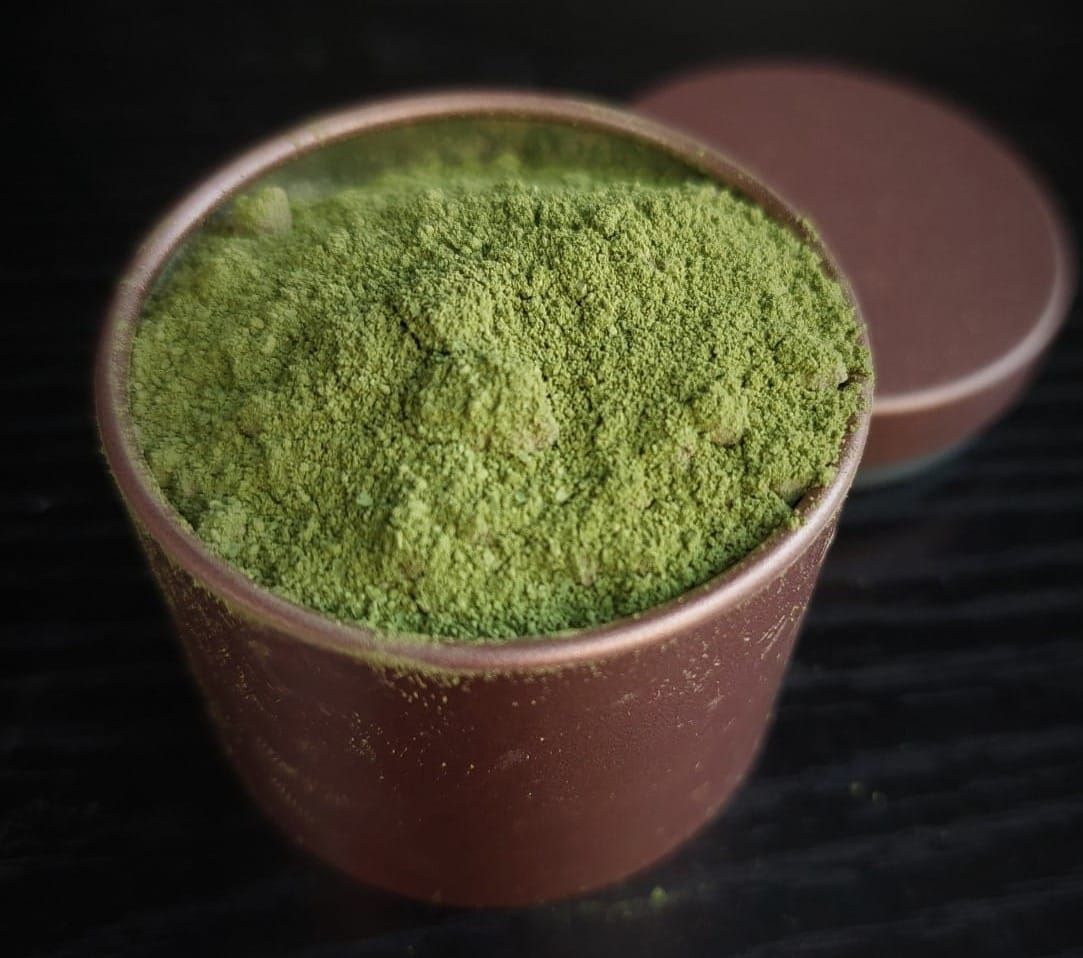
Every commercial beverage program faces a fundamental blind spot when scaling a matcha menu: treating matcha like coffee.
With coffee, you can operate on a nimble, "just-in-time" roasting schedule all year round. With matcha, you are dealing with a highly volatile, light-and-temperature-sensitive ground leaf that is harvested in volume just once a year. Trying to apply an on-demand coffee procurement mindset to a seasonal botanical asset leaves your supply chain exposed to quality drops, regulatory seizures, and unauthorized ingredient substitutions.
This playbook outlines the structural risks in global matcha sourcing and provides the operational framework to secure your inventory.
The Origin Illusion: Unmasking the Broker Loops
The single biggest threat to beverage consistency is the global broker network. Many procurement managers overpay for a "Japanese Origin" label, unaware of the structural layout of the East Asian supply chain.
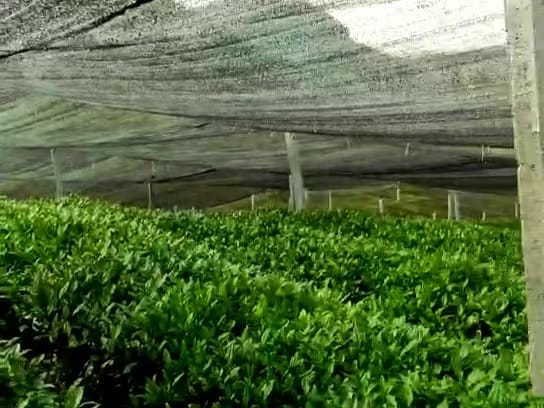
For more than two decades, premium processing hubs in Zhejiang have built unparalleled experience in large-scale automated shading and milling. This infrastructure is so robust that major historical legacy brands from Uji established trading and processing branches in Shanghai specifically to source raw material from vetted Zhejiang factories, blending and finishing the product to meet global demand. Uji Shanghai established in 2006.
The risk occurs when an operator relies on local spot-buying off importer shelves. If an importer fails to lock in their annual volume, brokers face immense pressure to keep contracts filled. This structural gap incentives them to quietly pool lower-tier, unshaded summer or autumn flushes from unvetted smallholders into commercial shipments, masking the bitter flavor and yellow-olive color shift under old paperwork.
- [Spring Allocation Runs Dry]
└──► [Broker Panics to Fill Contract]
└──► [Unshaded Summer Leaf Swapped In]
└─── ⚠️ THE PROCUREMENT BLIND SPOT: COA is outdated. Flavor is bitter. Color is dull olive green.
The Macro Rise of Ecological Clusters (Guizhou)
To insulate your supply chain from broker variance, forward-thinking procurement teams are diversifying into newly developed primary producer networks.
Over the last decade, targeted state-driven economic upgrade and anti-poverty initiatives in Guizhou (specifically clusters like Tongren and Jiangkou) poured immense capital into agricultural modernization. Because these programs were designed to transition underdeveloped mountain regions into high-value ecological zones, the infrastructure is pristine.
Unlike older, highly fragmented smallholder regions, these state-backed initiatives established massive, vertically integrated estates running continuous, fully automated tencha processing lines. The resulting terroir offers clean, low-residue mountain soil, giving procurement teams a highly reliable alternative for securing clean, macro-scale volume without the risk of smallholder batch blending.
Guizhou lures Korean tourists with matcha, minority culture, and new flights
中國最窮省變身「世界抹茶之都」!產量4年飆6倍 掀中日抹茶大戰
Technical Specifications: Demystifying Mesh Counts
A commercial program needs quantitative metrics to enforce quality assurance, rather than relying purely on subjective sensory tasting panels. The primary physical benchmark for operational success is particle fineness:
- The 800–1,000 Mesh Footprint: This is the operational sweet spot for commercial beverage programs and industrial manufacturing. A verified 800 to 1,000 mesh count ensures that the powder achieves excellent, stable suspension in dairy and alternative milks without rapid sediment fallout at the bottom of the cup. It is perfectly adapted for lattes, premium bakeries, and can even be whisked into a traditional bowl of matcha without clotting..
- The Whisking Variant: While tighter grinds of 1,200 to 1,300 mesh exist, they are primarily utilized to maximize the ease of building a dense foam during traditional ceremonial whisking. For commercial menus, maintaining an 800–1,000 mesh spec preserves product margins while delivering flawless texture. Tip: Think about eco-friendliness with energy consumption.
Securing the perfect physical specification—the ideal mesh count and color grade—is only half the battle. A matcha powder can possess flawless solubility and texturing properties on the bar floor, yet still become a total financial liability overnight if it runs face-first into localized, non-standardized international regulations.
Once your physical specifications are set, your procurement strategy must pivot to navigating the fragmented global legal landscape.
The Fragmented Regulatory Landscape: Global Asymmetry
There is no unified global standard for "clean" tea. International trade operates in a state of high ambiguity, where different markets enforce completely contradictory rules based on environmental baselines rather than agricultural quality.
The European Union: The Non-Intentional Contaminant Trap
The EU stands virtually alone in its aggressive customs screening for perchlorates and chlorates. The critical blind spot for procurement managers is assuming that a "Certified Organic" or "Premium Japanese" label protects their shipment from this filter. It does not.
Under EU regulations (Regulation 2023/915 for perchlorate and Regulation 2020/749 for chlorate), these compounds are classified as environmental and processing contaminants, not intentionally applied agricultural pesticides. Because they are contaminants, the EU enforces the exact same strict maximum residue limit (MRL) of 0.75 mg/kg for perchlorate across the board, applying identically to conventional tea and certified organic tea.
Furthermore, chlorates typically deposit onto grinding stones and packaging lines from standard chlorinated machinery wash-water. This means a perfectly organic, pristine facility can still trigger a customs violation if their water sanitation system isn't specifically audited for chlorate fallout.
Because domestic markets in Japan, Australia, and the United States do not systematically regulate or test for these specific elements, standard Japanese factories have no internal pressure to monitor them. Consequently, an ultra-premium, competition-grade Japanese matcha can effortlessly sail through domestic quality checks, only to be deemed illegal, seized, and destroyed the moment it lands at a port in Rotterdam.
The United States: A Hyper-Localized Litigation Trap
While the US FDA does not police perchlorates with the ferocity of the EU, entering the American market—specifically California—forces procurement managers into a completely different, highly localized legal minefield: California Proposition 65.
Matcha shortage spurs concern about unsafe bargain products in U.S.
Much like the EU's unique stance on chlorates, Prop 65 is a distinct, region-specific law mandating warnings for trace heavy metals like lead. Tea plants naturally and aggressively absorb trace minerals from groundwater and soil. The Prop 65 safe harbor limit for lead (0.5 micrograms per day) is so low that even the most pristine, high-end volcanic soils in Japan or untouched mountain terroirs in China can easily trigger a violation on a concentrated, ground-leaf product like matcha.
This is fundamentally a litigation risk, not a public health issue. Predatory private law firms in the US actively spot-test retail matcha brands purely to slap them with devastating private lawsuits. Once again, a premium or organic certificate is useless here—heavy metals exist naturally in organic soil. Protecting a commercial beverage brand requires working exclusively with automated factories that provide independent, batch-specific heavy metal panel readouts to verify an ultra-low baseline before the container ever leaves port.
5. The Logistics Reality & The Allocation Model
After looking at the labyrinth of EU contaminant thresholds, US litigation risks, and shifting regional crop capacities, it is easy to view the bulk import market with skepticism. But the truth requires a level of professional sympathy: managing a local matcha distribution business is an exceptionally difficult operational juggling act.
Local brokers are not intentionally trying to cut corners or substitute batches. They are caught in a structural squeeze. They are trying to predict the unpredictable—buying massive container volumes months in advance, navigating volatile ocean freight, absorbing the financial hit of localized customs delays, and hoping independent cafés buy the stock before it oxidizes on an ambient warehouse shelf. It is a broken model, but it isn't entirely their fault.
However, as a commercial procurement manager or multi-unit operator, your brand equity cannot afford to absorb their supply chain risks.
The 50kg/100kg Allocation Protocol
If your beverage program operates across a single high-volume location or a small footprint of 3 to 5 regional branches, there is a distinct point where you must graduate from a passive spot-buyer to a direct procurement partner.
When your annual volume crosses the 50kg to 100kg threshold, buying piecemeal from local warehouse stock ceases to make financial or qualitative sense. For a 4-store café network, a 100kg annual allocation breaks down to just 25kg per store—or a highly conservative 14 cups of matcha lattes per day per location.
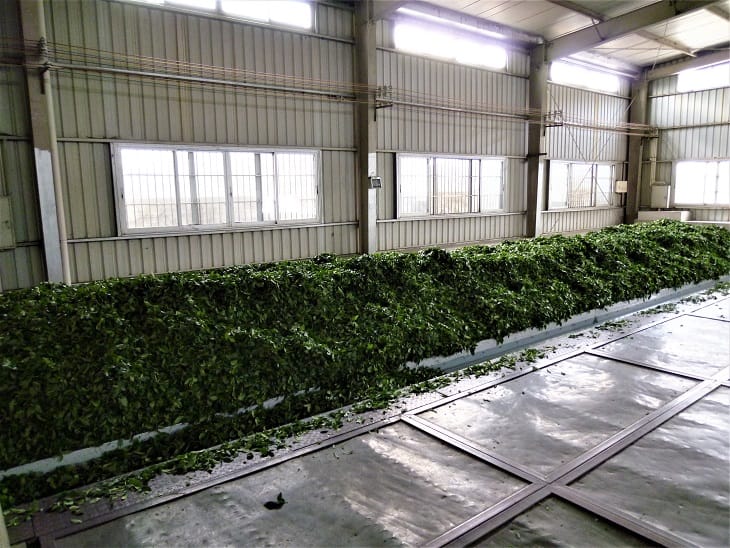
True commercial-grade matcha factories carry zero unsold powder inventory; they grind fresh-to-order from frozen raw tencha leaf to preserve volatile aromatics. To secure your share of a consistent premium flush, procurement commitments must be locked in by March, well before the first spring harvest begins.
The actual spatial footprint required to store a year's supply is surprisingly small:
| Annual Usage | Daily Volume Build | Physical Storage Footprint | Operational Value |
| 30 kg / year | ~16.4 Cups / day (5g build) | Size of a standard carry-on suitcase | Eliminates flavor drift across four quarters |
| 50 kg / year | ~27.4 Cups / day (5g build) | One small corner shelf in a walk-in freezer | Secures direct factory pricing; immunizes against broker swaps |
6. Case Study: The Micro-Packaging Protocol
When managing bulk procurement, the industry default is to ship raw material in standard, industrial 1kg bulk foil bricks. But if you look at how the most rapid-scaling, quality-obsessed cafés and artisanal bakeries in China manage their high-volume matcha programs, you will find they completely reject the 1kg model.
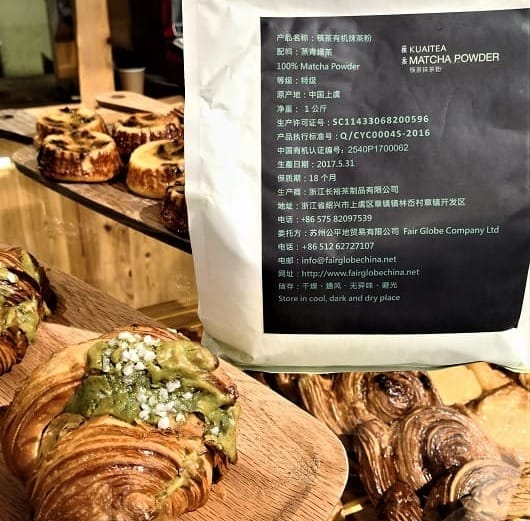
In my own operations supplying domestic B2B clients in China, we established a Micro-Packaging Protocol directly with our processing lines to solve a major operational headache: end-of-bag degradation.
When a café uses a 1kg bag, that bag sits open in a hot, humid bar environment for weeks. Every single time a barista reaches in to scoop out powder, a fresh wave of oxygen, ambient moisture, and light enters the bag. By the time the bar hits the bottom 300 grams of that brick, the matcha has oxidized. The vibrant jade green has turned a dull, swampy olive, and the delicate amino acid sweetness has degraded into a flat, harsh bitterness. The café's first latte of the month tastes completely different from their last.
[1kg Bulk Brick Model]: Opened 40+ times ──► Constant Oxidation ──► Final 30% of bag is bitter/yellow
[Micro-Pack Protocol]: Opened 5-7 times ──► Used Rapidly ──► 100% of volume stays vibrant jade
To eliminate this waste, we work directly with the factory infrastructure to package seasonal allocations into smaller 250g shield-packs at origin, customized to response the needs of our customers in China.
- The Freshness Guard: A 250g or 500g unit is opened, utilized, and completely finished by a active bar within a matter of days. It minimizes environmental exposure to a fraction of the 1kg brick, ensuring that the volatile aromatics and color remain perfectly pristine from the first gram to the last.
- The Retail Spin-Off: Because these micro-packs are sealed in premium, high-barrier structures, they are perfectly configured to accept custom-branded over-labeling. This instantly flips a back-of-house ingredient cost into a gorgeous, high-margin retail product sitting on the front counter for customers to buy for home use.
Standard Quality Assurance Best Practices
Without deep visibility into a broker's exact backend infrastructure, a procurement team can protect its consistency by establishing three baseline communication practices:
1. Request Agricultural Traceability & Grade Verification Docs
Before locking in a commercial contract, ask your supplier for clear documentation detailing the specific agricultural source of the batch and its matching grade verification records. Verifying the exact lineage and processing dates of the lot helps separate structural allocations from pooled broker spot-buys.
2. Request Pre-Shipment Samples for Front-of-House Testing
Never accept a bulk shipment based entirely on a historical spec sheet. Request a pre-shipment sample from the incoming lot. Your front-of-house staff can run a simple, 30-minute physical color and suspension test to confirm the shipment matches your baseline before the container is approved for your bars. (For a complete guide on how your bar team can physically audit a sample on the cafe floor, see Sourcing Realities and Sensory Myths: How to Balance the Matcha Trend with Operational Speed).
Managing Sourcing Values: Transparency & Partnership
We do not believe in the traditional, opaque broker relationship where data is hidden behind marketing theater. Our framework is anchored entirely in the core values of transparency, absolute traceability, and long-term supply chain partnership.
We work exclusively with modern, highly integrated agricultural estates that carry extensive, proven international export experience. These processing lines are built structurally to clear strict global testing grids, ensuring that the journey from field to counter is completely documented, legally secure, and optimized for freshness.

We publish this data not to complicate the buying process, but to share what we know and what we care about. If you are looking to bring clarity to your sourcing infrastructure, verify your origin metrics, or explore a direct, fresh-milled allocation pipeline for your beverage program, we welcome the conversation.
Mastering Matcha Whisking Mechanics
Unlock direct access to our 8-minute technical video training covering shear force, bamboo prong geometry and microfoam stabilization.
Unlock Private Video Training →We pull back the curtain on the raw fluid dynamics of the whisk, demonstrating the exact mechanical hand-whisking protocols required to achieve a flawless, sweet, micro-foamed water suspension in under 45 seconds without sediment or bitterness. For more of our deep-dives analysis, check out our collection on [Medium].