Why Does My Chinese Green Tea Taste Different Every Year?
Demystifying harvest volatility. Discover how annual micro-climate shifts, seasonal transitions, and processing mechanics alter tea chemistry.
The Portfolio Blueprint: Why Taste Without Traceability Is a Supply-Chain Liability
The Anxiety of the Shifting Cup
If you spend any time browsing enthusiast forums or speaking with independent beverage operators, you will notice a recurring pattern of sensory anxiety. The same frantic questions populate search feeds every spring:
- "I just opened this year’s batch of Pre-Ming Longjing from my usual vendor, and it feels completely hollow compared to last year. Did I get scammed with a fake lot, or did my brewing parameters break?"
- "Why does this pure-bud Anhui Maojian lose its entire aromatic profile after only two quick infusions? For this price, shouldn't it have more stamina?"
- "My importer told me this batch was harvested from the exact same hillside as last year, but the leaf morphology and bitterness are completely unrecognizable. Is it normal for premium tea to fluctuate this violently?"
When a specific lot of green or black tea alters its sensory profile year-over-year, buyers routinely panic. The default consumer instinct is to assume a breach of trust in the supply chain. To shield themselves from this unpredictability, both operators and serious drinkers look for comfort in relational sourcing. They trust a domestic importer, who trusts a licensed exporter in China, who in turn relies on regional specialty supply houses or massive open-air wholesale hubs—such as the historical trading blocks on Hangzhou Jiefang Road (杭州解放路茶葉店) or the sprawling, high-volume pavilions of regional tea markets packed with thousands of competing lots in Huangshan, Anhui.
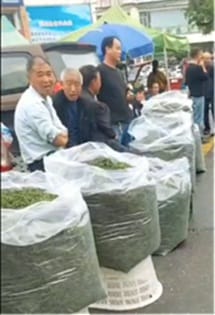
This procurement model is highly authentic, standard, and operationally convenient. It closely mirrors the global specialty coffee trade, where green buyers aggregate at the trading tables of export hubs like Medan rather than hiking the remote, high-altitude ridges of Sumatra to interview individual smallholders. In season, experienced regional suppliers travel from farm to farm, buy the wet or dried biomass and carry it down to the city. Then pack it in showrooms.
It is a completely logical, free-market trading environment. But if you are paying premium capital under the assumption that this loose network guarantees precise year-over-year origin continuity, you are deeply misunderstanding the mathematics of the field.
The Open Market Blending Machine
Consider the mathematics of the sacred, Pre-Qingming 1-bud-1-leaf Longjing from the authentic West Lake protection area. Though the total geographic protection zone spans roughly 168 sq km, this historical terrain is fractured among more than 9000 tea farm families.
Contrast this with the ancient tea forests of Mount Jingmai—recently listed as a UNESCO World Heritage cultural landscape—where the core ancient tea forest area alone constitutes an immense footprint of approximately 28,000 mu. And Mount Jingmai is just one of the six main legendary mountains producing authentic ancient tree tea in Yunnan.
When confronted with this immense regional scale and extreme fragmentation, do you honestly expect a city broker or an exporter to taste every single possible family supply to find the "best taste" on their list? Is that even operationally possible?
When an export broker or regional market vendor builds a multi-hundred-kilogram shipment to satisfy an international order, it is a logistical impossibility for them to evaluate, isolate, and maintain individual lots from hundreds of separate family plots daily. In reality, they are evaluating macro-samples at central market hubs. Bags collected from multiple adjacent family holdings are routinely combined to fulfill commercial export volumes.
When next year's harvest arrives and your profile shifts, the broker effortlessly deploys the classic industry defense: “Ah, last year's farm faced poor weather, but don't worry—I hand-selected a different lot this spring that tastes even better.” Without direct tracing to a specific, legal cooperative entity at the absolute bottom of the supply chain, you are entirely dependent on a middleman's subjective palate and variable market blending. You own a transient lottery ticket, not a sustainable flavor asset.
Shifting the Brain from Luxury Marketing to Agricultural Durability
When buyers realize how open markets operate, an arrogant or idealistic attitude often takes over: “I will simply pay a higher premium to force complete traceability to a single farm, and I demand that they deliver my identical, elite taste profile every single spring.”
This is where the marketing-brain completely breaks against the reality of working with mercurial nature and un-medicated soil.
If you bypass the city brokers to trace directly to a single village cooperative, you are no longer dealing with a standardized factory; you are dealing with raw agricultural risk. If a fierce early-spring frost destroys the tender first buds, or if relentless rains hit the mountain during the picking window, the farm’s premium output changes instantly. In an authentic cooperative framework, farmers must be paid for their manual labor on the day the leaf is plucked—not months later after a retail tea house sells an infusion. If a natural disaster strikes the spring buds, the tougher, later-emerging second and third mature leaves become the cooperative’s vital financial safety net.
If serious drinkers and B2B owners dogmatically abandon a farm on the spot the moment a vintage shifts due to weather, they are destroying the very supply chain they claim to prize.
True knowledge of Chinese tea drinking does not mean the "pure bud chase" is inherently wrong. If a consumer wishes to spend premium upfront capital on a highly labor-intensive, pure early-spring flush, it is a completely valid expression of personal taste. It could be a self-treat to celebrate a milestone success, a weekly indulgence during a close family gathering, or a quiet, daily morning greeting to the sunshine.
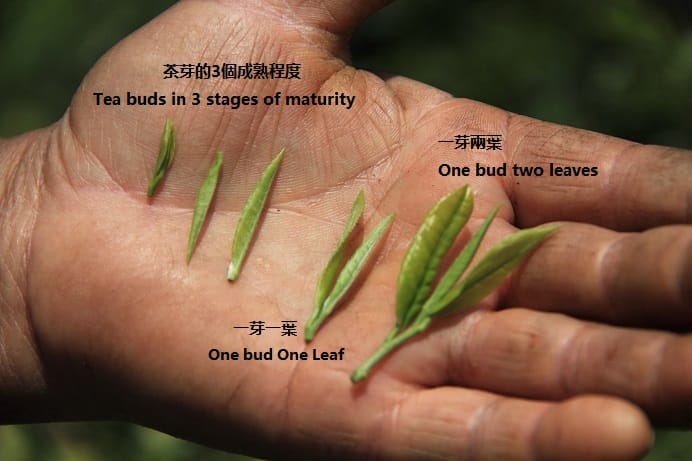
Instead, true procurement intelligence means shifting the paradigm from luxury marketing to agricultural durability. After a morning anchored by an elite pure bud, how about a robust 1-bud-2-to-3-leaves harvest after lunch, or an infusion paired alongside an afternoon cream cake? They are not lower quality, they are different quality bringing different flavour.
Truly respecting and consuming a traceable origin means honoring the natural mass balance of the tea plant. When you diversify your menu or your collection to incorporate a robust variety of tea structures, you establish a Healthy Sourcing Portfolio.
[Your Regional Sourcing Portfolio]
   ├── Zhejiang (Longjing Core) ──> West Lake Longjing & Yuezhou Longjing
   ├── Anhui (Maofeng/Qimen)    ──> 1-Bud-1-Leaf & 1-Bud-2-3-Leaves Standards
   └── Henan (Maojian)          ──> 1-Bud-1-Leaf & 1-Bud-2-3-Leaves Standards
To maintain a healthy, unbroken menu year-round, a smart business does not stake its entire operation on a single farm's narrow two-week harvest window. If a severe micro-climate event devastates your premium lot in the West Lake core, your menu survives because you have hedged your risks across distinct geographic regions with varied micro-climates. You pivot your seasonal focus to a pristine Yuezhou lot, or highlight the distinct, structure-driven profiles of your Anhui and Henan allocations.
Furthermore, you must accept that human taste buds change vigorously with age, weather, and mood. Why limit your community to one sharp, hyper-sweet bud profile?
Data from Biochemistry of Tea Leaves reveals the structural truth of leaf maturation. While young spring buds are concentrated in volatile amino acids, they are chemically volatile. As the shoot develops, the chemical architecture undergoes a profound shift. Look at the data:
| Plucking Standard | L-EGCG (mg/g) | L-EGC (mg/g) | Total Catechins (mg/g) |
| Pure Bud | 104.69 | 8.67 | 147.08 |
| 1-Bud-1-Leaf (1B1L) | 88.93 | 15.63 | 150.32 |
| 1-Bud-2-Leaves (1B2L) | 76.10 | 18.23 | 137.47 |
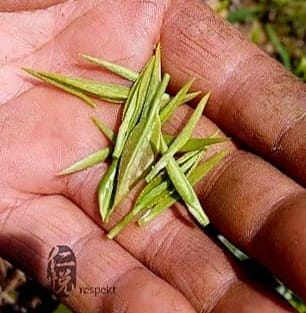
While the sharp, astringent esterified兒茶素 (L-EGCG) drops from 104.69 mg/g down to 76.10 mg/g, the non-esterified兒茶素 (L-EGC) spikes by more than 200%—jumping from 8.67 mg/g in pure buds to 18.23 mg/g in an一芽二葉 (1B2L) structure. Furthermore, the total catechin count of an一芽一葉 (1B1L) harvest actually exceeds that of a pure bud.
The mature second and third leaves are not processing filler; they are a structural powerhouse. The dramatic surge in L-EGC and polymeric polyphenols delivers the physical viscosity, the deep mouth-thickness, and the brewing stamina across 3 to 5 continuous infusions that a fragile spring bud simply cannot sustain.
By expanding your boundaries to embrace these diverse plucking standards, you ensure that clean, catechin-rich biomass isn't wasted or dumped blindly into volatile wholesale markets due to rigid consumer biases. You align your business model with the merciful, mercurial parameters of the soil—achieving a pick-and-sold equilibrium that protects both your retail margins and the farming families at the absolute bottom of the chain.
The Six-Month Green Tea Clock
This structural reality changes how an authentic establishment manages its physical inventory throughout the year, especially regarding highly fragile green teas.
In many Western retail spaces, there is an operational obsession with keeping a static, identical green tea menu fully stocked from January through December. In China, however, it is a matter of national cultural understanding that the lifecycle of a green tea is governed by a strict molecular clock.
Local Chinese drinkers consume fresh spring green teas heavily within a tight six-month window. By the time autumn arrives, everyone understands that the delicate, highly volatile aromatic compounds of high-bud green teas have diminished dramatically. Most people finish their fresh spring stocks by the end of summer. Drinking those ultra-delicate, high-bud profiles during the deep autumn or winter is recognized as a meaningless exercise; the vibrant fragrance has naturally faded.
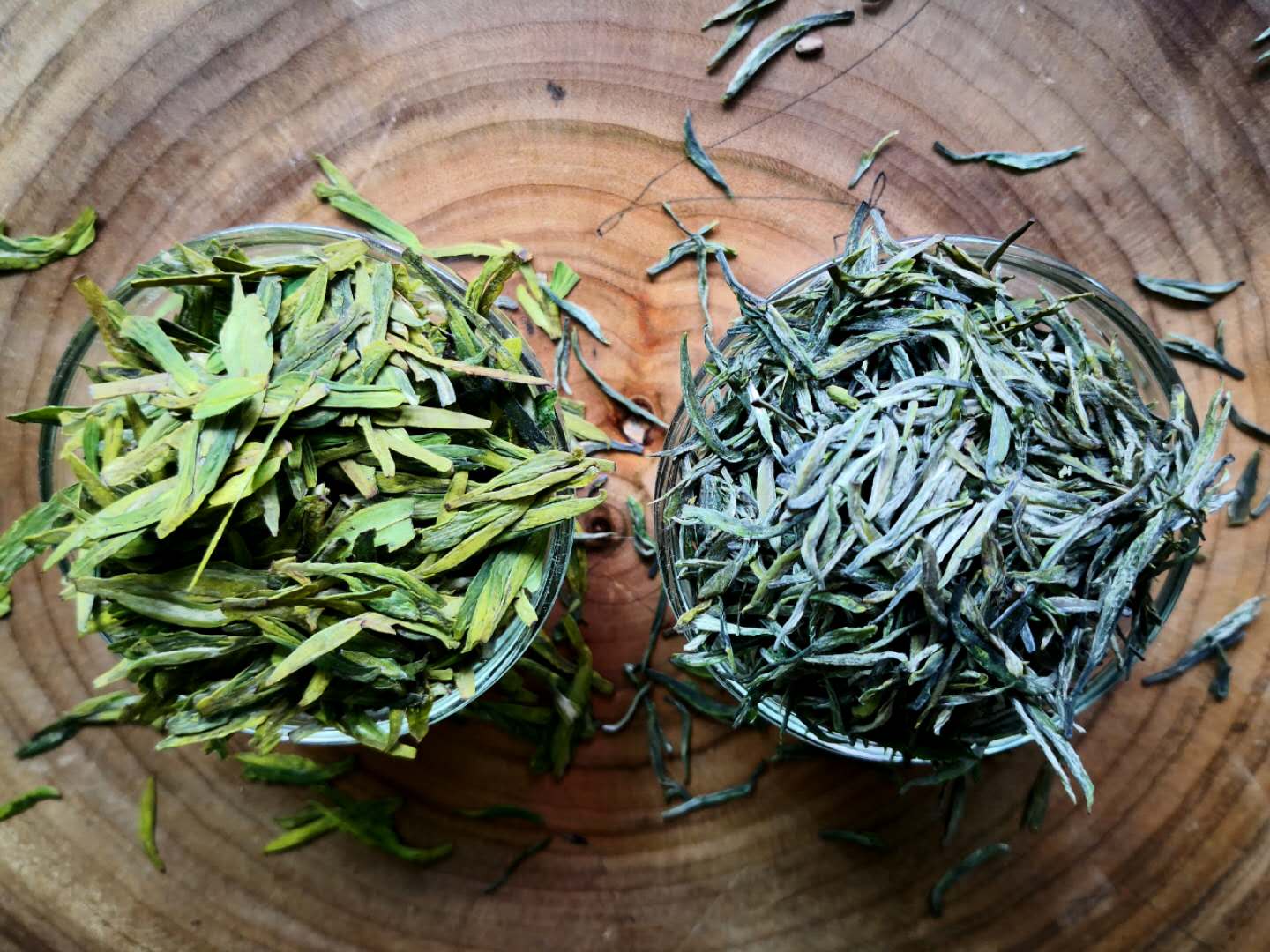
Do not be shy about running completely out of your premium spring green tea stock as winter approaches. Real tea spaces embrace zero-stocking. They hold a reliable, mature 1-bud, 2–3 leaf standard for everyday drinking, and when the elite spring batches are depleted, the menu stays completely empty from Christmas until the next spring vintage.
To safely hold your baseline inventory across those six core months, tea science proves that environmental controls are absolute:
The Preservation Baseline: Research demonstrates that optimal green tea storage requires a sustained environment where temperatures are held below 5°C, relative humidity is kept at or below 60%, light is completely excluded, and dry leaf moisture content remains strictly under 6% to 7%.
Data confirms that vacuum-sealed storage environments experience a drastically lower rate of free-radical clearance (DPPH) decay compared to standard traditional zip-lock bags or plastic storage boxes.
On a practical retail level, this means utilizing dedicated refrigeration units to stall molecular oxidation. However, you cannot constantly pull a large master batch in and out of a cold fridge. The temperature drop will cause immediate atmospheric condensation, introducing micro-moisture that ruins the crisp dry leaves instantly. You must store your master volume in isolation and only extract small, target samples for day-to-day evaluation.
The Blind Tasting Reality Check
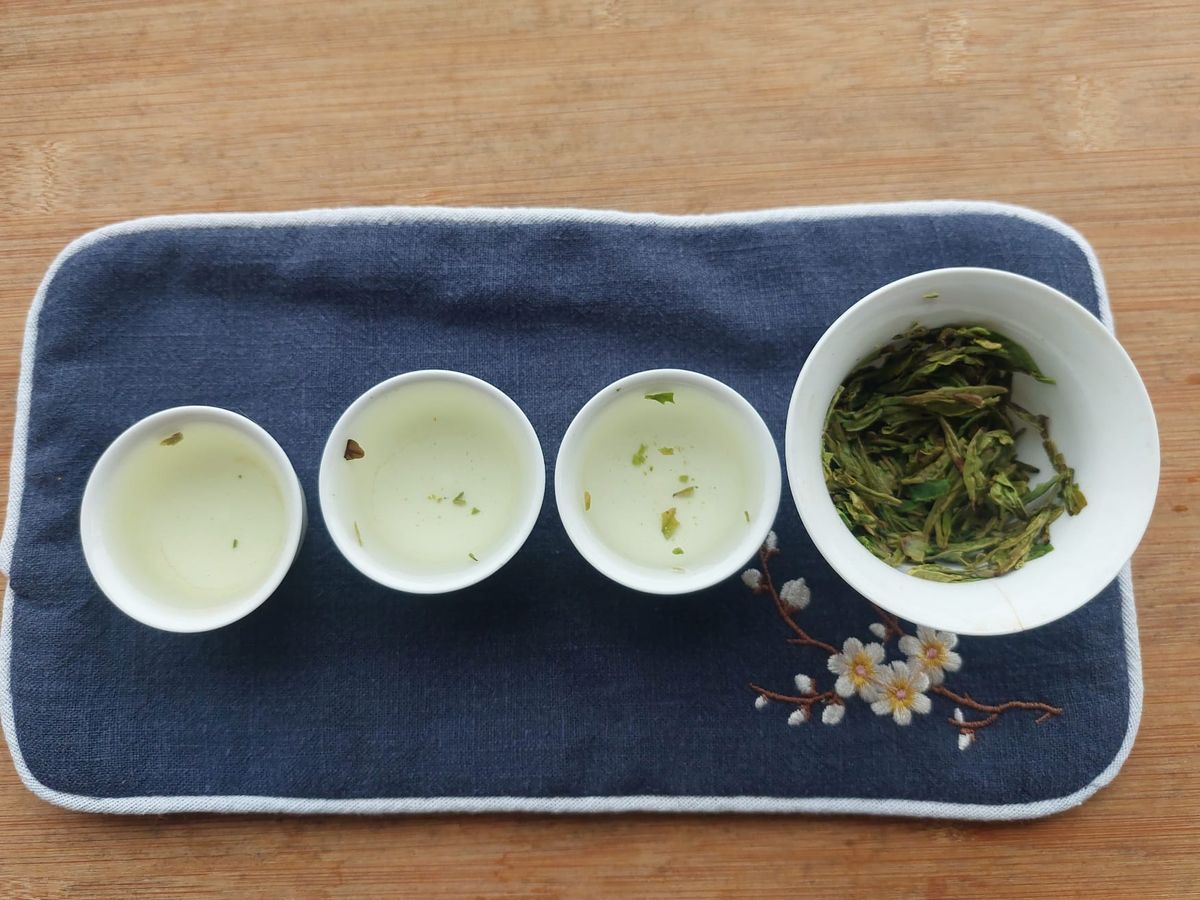
How do you educate serious drinkers to detach from market noise and appreciate a diverse, traceable leaf portfolio? You strip away the visual biases, the broker stories, and the luxury price tags through a strict Blind Tasting Confrontation.
By serving infusions in identical, neutral vessels where the inside of the bowl is solid white porcelain, the visual architecture of the leaf is hidden from view. You prepare continuous infusions in 3 flights, allowing guests to judge the liquid solely on its structural body, clarity, and extraction endurance across multiple brews, completely isolated from marketing narratives.
When you run this workshop with minimal commentary—avoiding unnecessary academic lectures and letting the participants talk directly to the liquid and their inner child—the visual illusion of "rarity" evaporates. Drinkers regularly discover that the cup their palate naturally scores the highest is rarely the most expensive box on the shelf. Once the sensory confrontation is complete, you reveal the dried and wet leaf structures. By connecting their actual taste preferences to verified, farm-level origin data, you arm your community with the ultimate tool: the ability to value authentic, traceable agricultural realities over transient wholesale hype.
Seasonal Blind Tasting Workshop Framework
Unlock our practical, step-by-step operational run-down for hosting rigorous blind tasting workshops, calibrating guest palates on harvest timing, and building an uncompromisingly resilient tea portfolio.
Access Chinese Tea Logic Club →