Gongfu Cha Is Not What Most Online Guides Tell You: Correcting the Myths, Regional Heritage, and Practical Skill
Gongfu Cha is widely misunderstood in English-language guides. This article clarifies the two distinct meanings of “Gongfu,” corrects common myths about brewing methods, and explains the authentic Chaozhou heritage and practical technique for serious practitioners.
Distinguishing Processing Craft from Brewing Heritage – A Clear Guide for Serious Practitioners
Gongfu Cha (工夫茶) appears frequently in modern tea descriptions, tasting notes, and online discussions. Its growing popularity in the West is encouraging — a sign that Chinese tea culture is gaining deeper appreciation beyond generic tea categories. The visual appeal of small vessels, precise pouring, and evolving infusions across multiple steeps is compelling. You might also encounter the vivid slogans "Lord Guan Patrols the City" and "Han Xin Counts the Soldiers" for the pouring technique.
However, a closer look reveals that a significant portion of what is presented as Gongfu Cha diverges from its actual cultural and practical roots. In my experience working with Chinese tea for many years, a large portion of popular English-language explanations and tutorials contain notable inaccuracies or oversimplifications. The most common misconception is treating any use of a gaiwan — or any high-leaf-ratio, small-pot, multi-infusion approach — as synonymous with Gongfu Cha. This broad application dilutes the term’s specific regional and cultural meaning and can mislead serious practitioners seeking an authentic understanding.
The gap largely stems from limited accurate English resources rather than deliberate misinformation. Most educators share what they have learned in good faith. This article provides a clear framework grounded in national standards and heritage recognition.
The Two Distinct Aspects of "Gongfu" (工夫)
In China, "Gongfu" refers to two distinct concepts in tea. One concerns the intensive processing of black tea originating in Fujian. The other refers to a specialized oolong brewing method from Chaozhou, Guangdong. Both are included under the UNESCO inscription of Intangible Cultural Heritage "Traditional tea processing techniques and associated social practices in China," falling respectively under traditional craftsmanship and social practices.
In Chaozhou usage the character is specifically 工 (not 功). 工 emphasizes careful expenditure of time, attention, and craftsmanship. 功 more commonly refers to martial or technical skill. In the local Chaoshan dialect the two characters are also pronounced differently (工 as “gang,” 功 as “gong”), and the earliest historical records of the practice consistently write 工夫茶. The later widespread use of 功夫茶(martial art) is largely a Mandarin-influenced homophone substitution.
Under the global UNESCO framework, this focused skill is formally split into two distinct, legally recognized dimensions:
- Gongfu Black Tea Processing (工夫紅茶): Traditional Craftsmanship. This is a grueling factory manufacturing metric of manual labor, precise rolling, and uniform sorting designed for export stability. It is entirely unrelated to brewing rituals.
- Gongfu Cha Brewing (工夫茶): Social Practices. A hyper-localized regional tea-brewing custom originating in Chaoshan, Guangdong province , engineered specifically for extracting oolongs—most notably, Phoenix Dancong.
National Standards and the Industrial Genesis of Gongfu Black Tea (工夫紅茶)
Under Chinese national standards, domestic black tea is officially categorized into three clear types: Broken Black Tea (紅碎茶), Gongfu Black Tea (工夫紅茶), and Souchong Black Tea (小種紅茶). "Gongfu" here denotes a refined, multi-step industrial processing approach emphasizing meticulous craftsmanship.
Beyond primary processing stages (withering, rolling, oxidation, and drying), Gongfu Black Tea requires extensive secondary refinement: systematic screening, stalk separation, fan-sorting, manual impurity removal, and final roasting. This standard applies uniformly whether processing large-leaf Yunnan varieties or small-leaf Qimen (祁門) types.
Only Tanyang Gongfu (坦洋工夫) is listed on China’s national intangible cultural heritage register. Developed in 1857 in Fu’an, Fujian province, it was specifically created to meet European merchant preferences. Early exports featured smoky Lapsang Souchong, but local producers adapted Wuyi techniques, removing wood-smoke drying and introducing precise sorting and charcoal roasting to create a smoother, refined black tea tailored for export. Its macro-history reflects purely commercial realities rather than ancient meditation.
Engineered as a clean, sweet, non-smoked export commodity tailored explicitly for British and Dutch capital to meet European taste profiles.
Maritime disruptions during the World Wars and fierce competition from highly mechanized CTC production in Assam and Ceylon cause export orders to dry up. Plantations are widely abandoned.
The PRC revives Tanyang Gongfu as a state-monopolized export to the USSR and Europe to generate foreign currency. Domestic consumption remains low, under 10% of total domestic tea consumption.
As China transitions to a free market, consumption pivots inward. Domestic market share arises to 34% of total annual black tea production by 2000 and clears over 90% by 2024, shifting the industry from an export-only framework to a domestic powerhouse.
Intangible Cultural Heritage (ICH) Gongfu Cha with Oolong Tea
The second concept of Gongfu Cha refers strictly to brewing (工夫茶艺), classified under social practices. Registered in 2008 by the Chaozhou city government under the folklore category of National Intangible Cultural Heritage, it involves traditional practices created, transmitted, and sustained within specific cultural contexts.
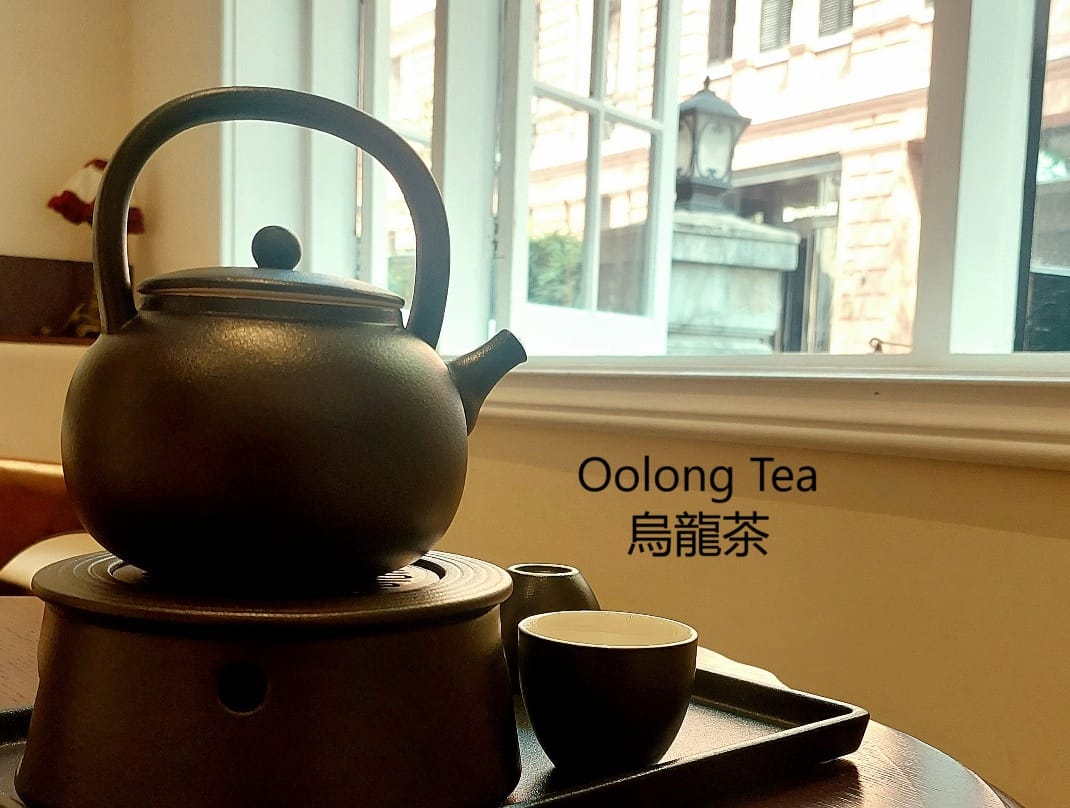
This brewing technique originates from the Chaoshan region of Guangdong and is closely associated with high-aroma oolong teas such as Phoenix Dancong. While modern tourism boards list up to 21 steps, the authoritative historical anchor is the 1957 work Chaozhou Tea Classic: Gongfu Cha by Weng Hui Dong (翁輝東), which outlines the purely functional "Ancient Nine Steps" (古法九式):
1. 治器 (Zhi Qi)
Action Focus: Preheating the teaware.
Rinse the teapot and cups thoroughly with boiling water to sanitize and eliminate the vessel's thermal inertia.
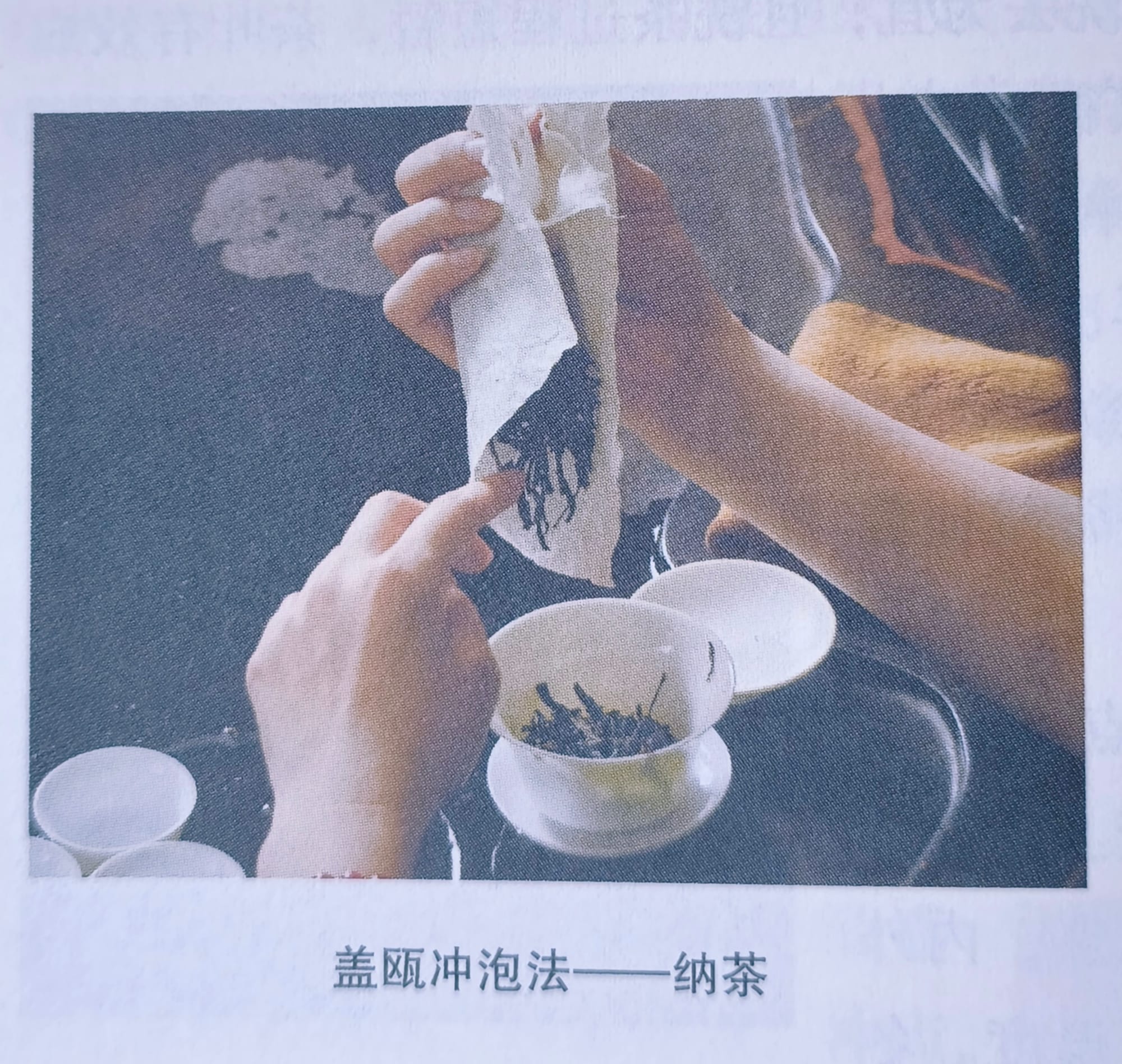
2. 納茶 (Na Cha)
Action Focus: Structural leaf layering.
Layer leaves strategically: coarser stems at the bottom/spout, fine fragments in the center, and whole leaves on top. This gradient prevents dust from choking the spout. Fill to 70–80% capacity.
3. 候湯 (Hou Tang)
Action Focus: Thermal and oxygen calibration.
Observe the boiling water. Wait for the "fish-eye" second boil stage for optimal extraction temperature, ensuring you do not over-boil and exhaust dissolved oxygen.
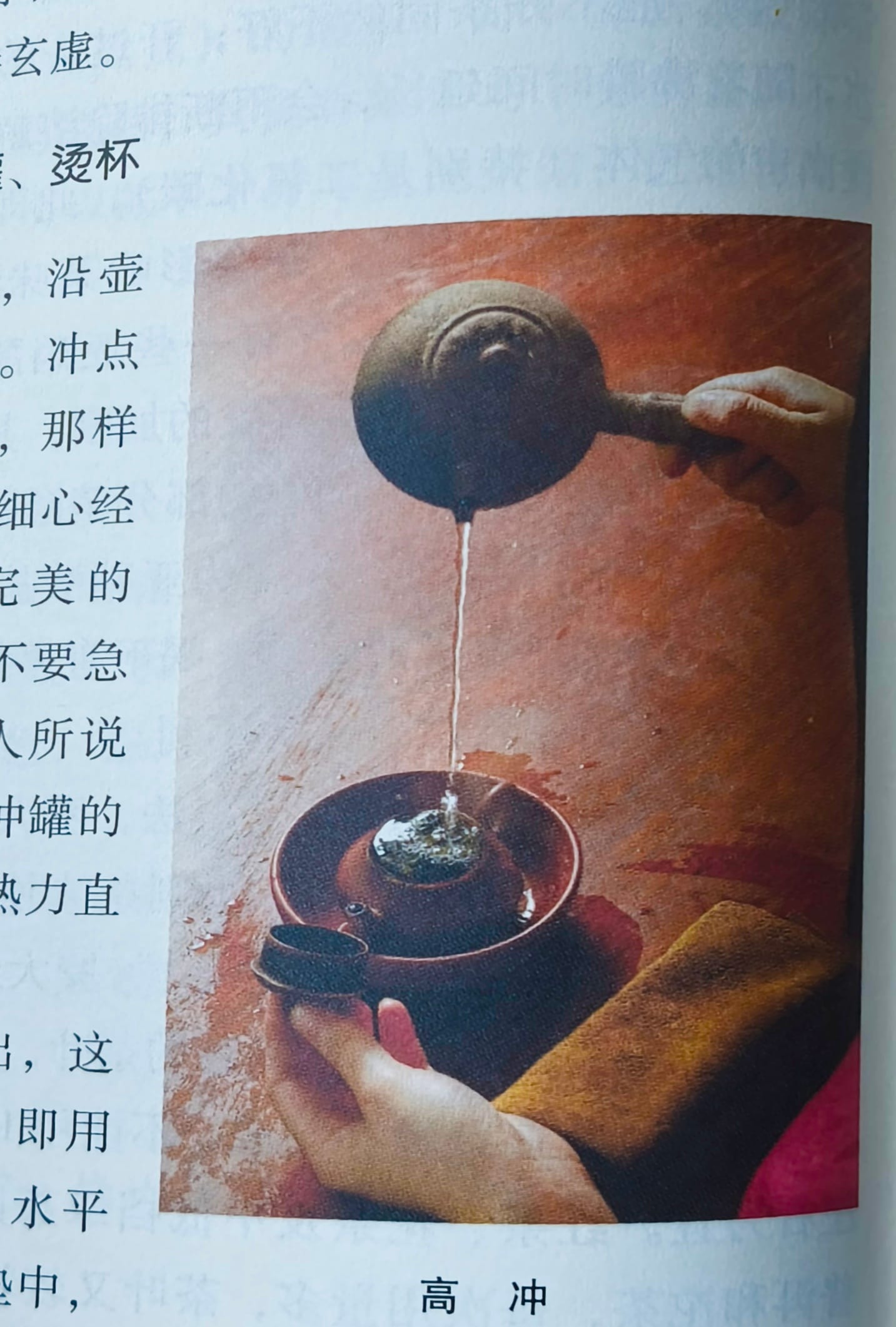
4. 冲點 (Chong Dian)
Action Focus: Edge-pouring fluid mechanics.
Pour water steadily along the inner rim of the pot. Avoid direct impact on the center of the leaf bed, which agitates bitterness and expels volatile oils prematurely.
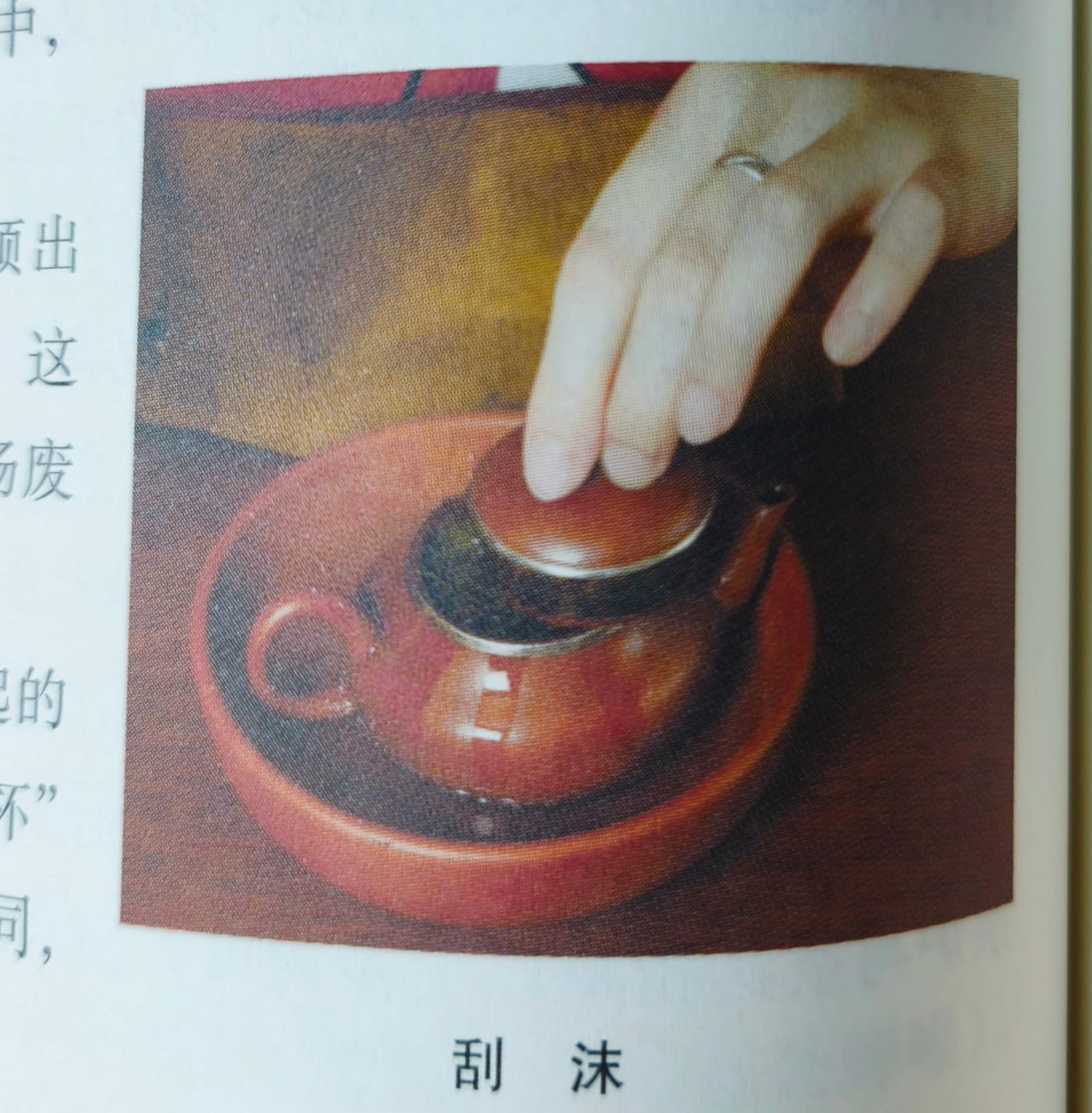
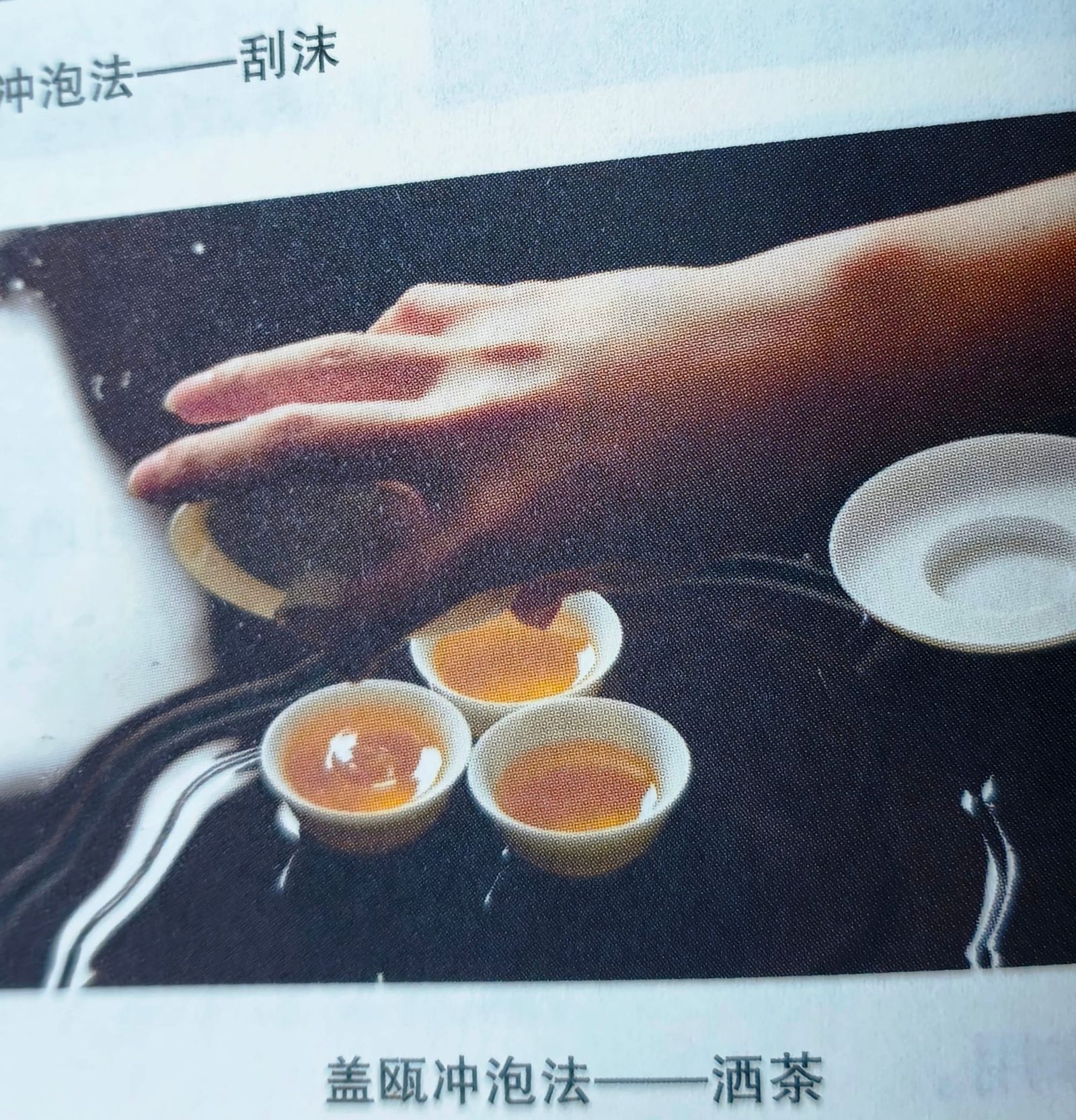
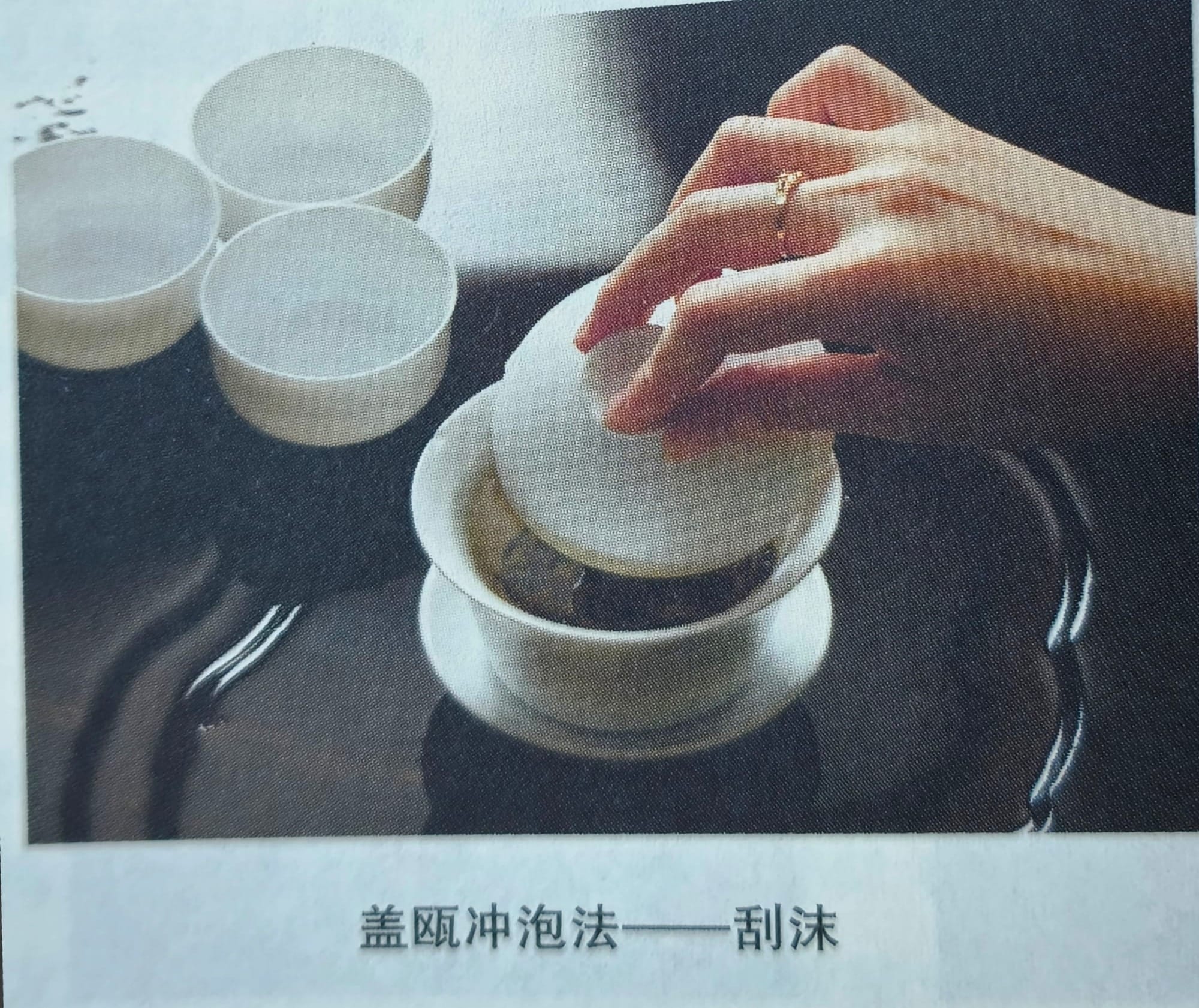
5. 刮沫 (Gua Mo)
Action Focus: Surface purification.
Use the lid of the teapot to gently slide across the rim, skimming off the surface foam and floating leaf debris before sealing.
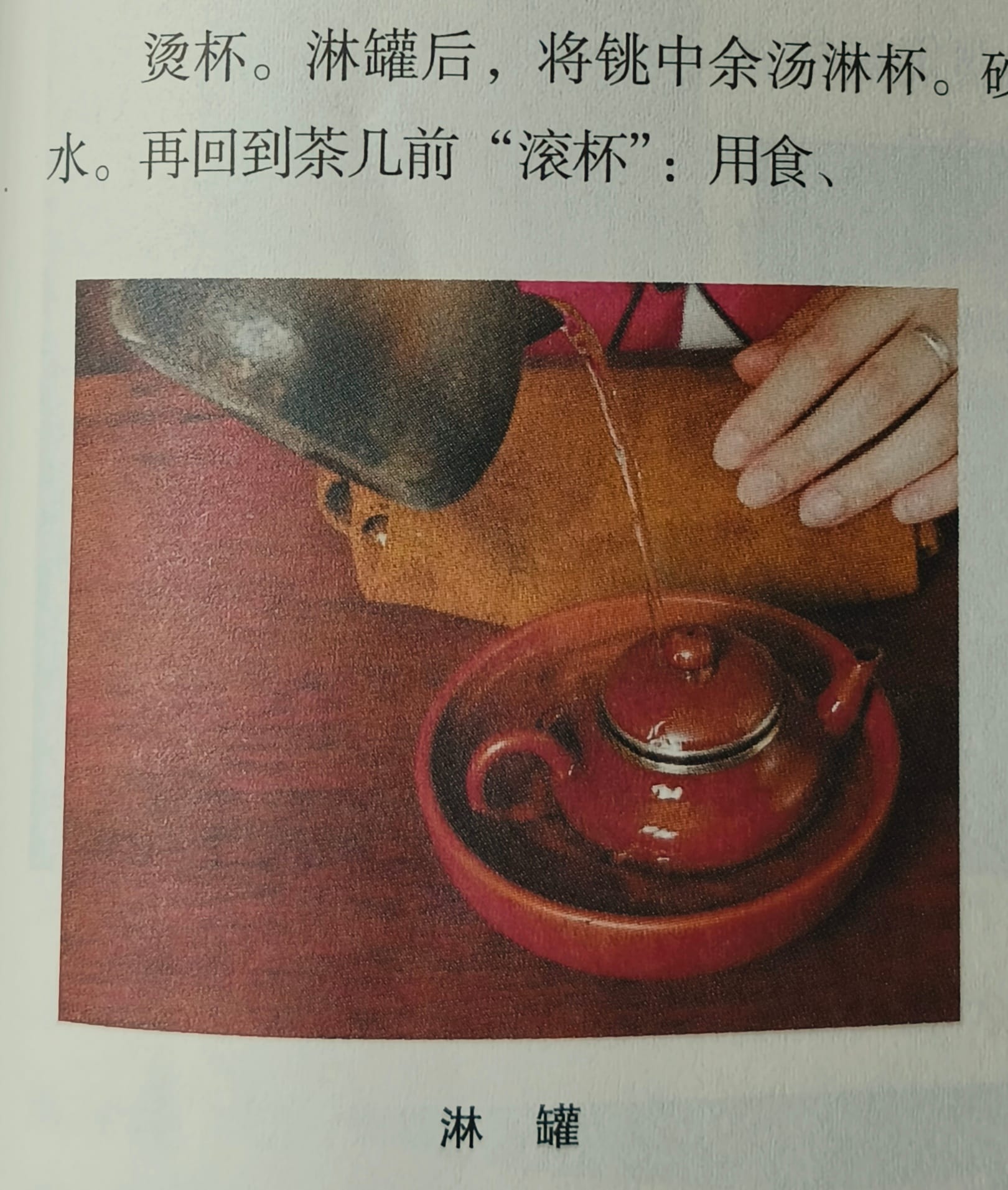
6. 淋灌 (Lin Guan)
Action Focus: External temperature locking.
Douse the exterior of the sealed teapot with boiling water to maintain internal temperature consistency and lock in heat retention.
7. 燙杯 (Tang Bei)
Action Focus: Serving temperature alignment.
Swirl boiling water through the tasting cups immediately before pouring to ensure the hot liquor does not hit a cold porcelain surface.
8. 灑茶 (Sa Cha)
Action Focus: Density equalization.
Pour in continuous, low-altitude circles across the cups to ensure even liquor density, ending with rapid, decisive drops to completely drain the pot.
9. 品茶 (Pin Cha)
Action Focus: Palate aeration.
Sip the tea with deliberate aeration to volatilize compounds across the palate, fully auditing aroma, body, and return sweetness (Huigan).
The Evolution of Distribution: Bypassing the Fairness Pitcher
The vivid slogans introduced at the beginning of this article—"Lord Guan Patrols the City" (關公巡城) and "Han Xin Counts the Soldiers" (韓信點兵)—are heavily associated with Gongfu Cha today. Yet, if we look back at Weng Hui Dong’s foundational 1957 text, these poetic labels are completely absent.
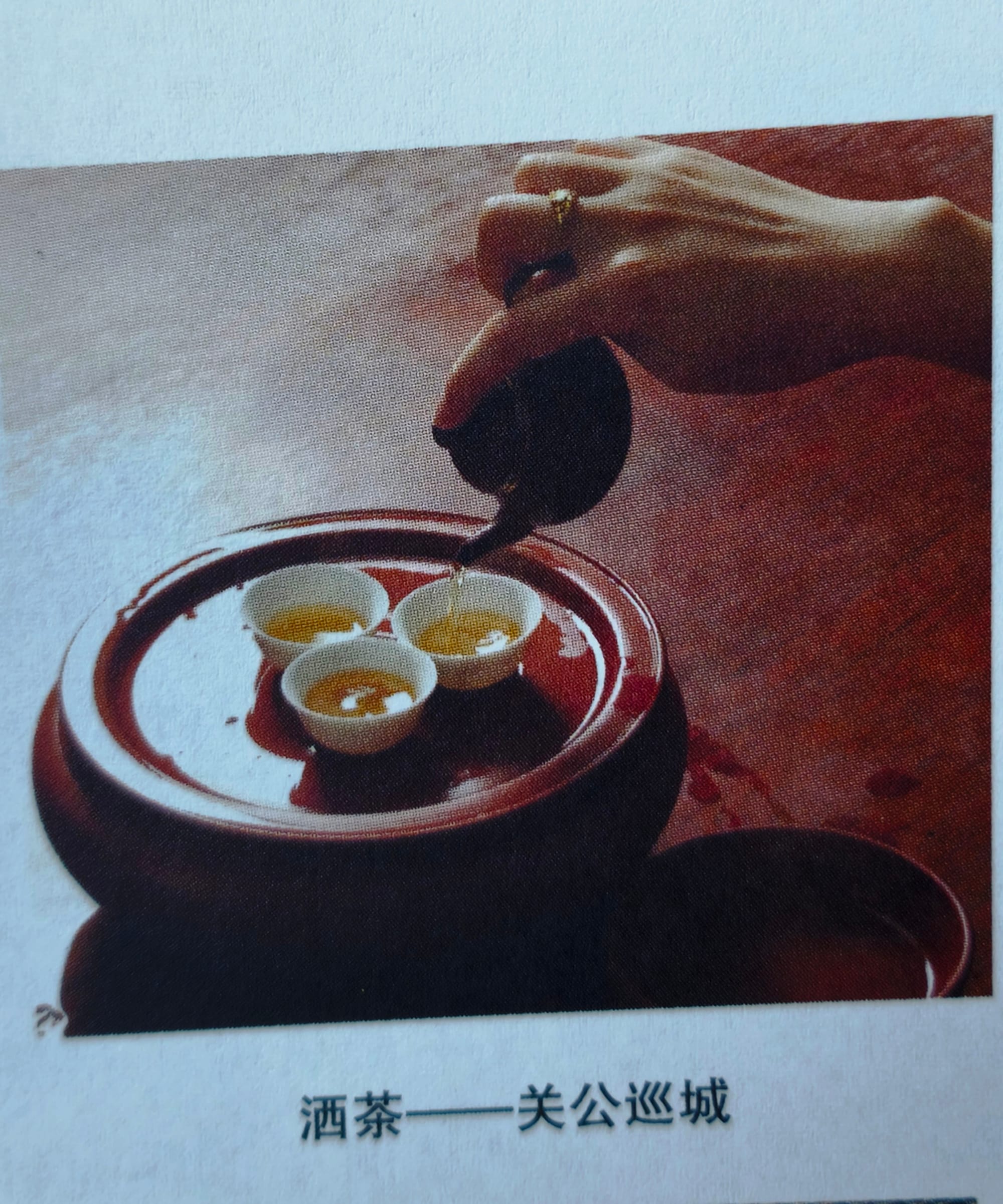
The historical record shows that these phrases are not ancient dictates; rather, they are later oral dramatizations of the eighth step: Distribution (灑茶). Naming the movements after iconic historical heroes was a brilliant, practical way to memorize the physics of the pour.
This brings us to a second, even larger omission in those traditional nine steps: the fairness pitcher (公道杯) is nowhere to be found.
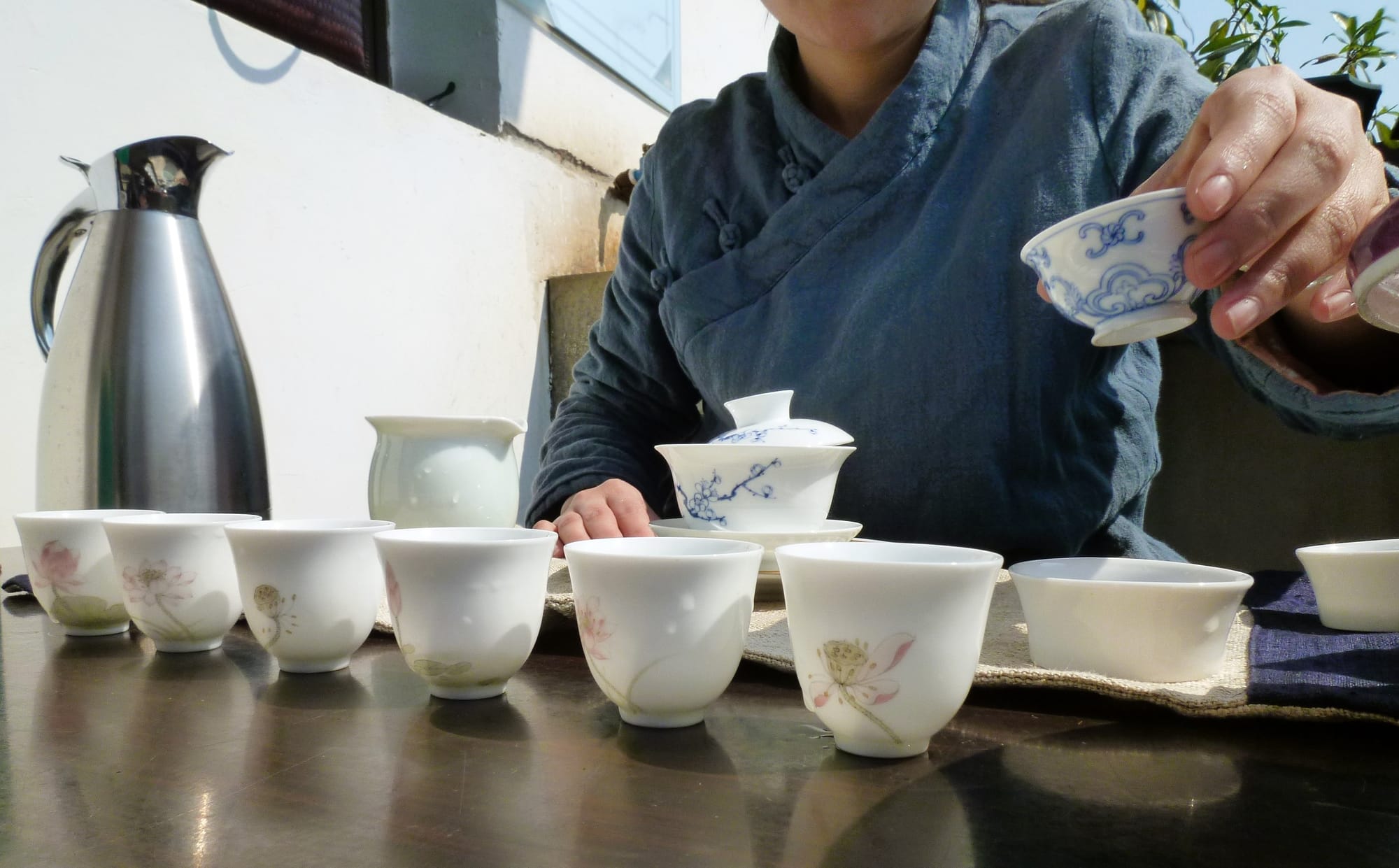
Crucially, the dramatized movements of "patrolling the city" and "counting the soldiers" were engineered specifically to bypass the need for a pitcher. By pouring back and forth in continuous circles directly into the serving cups, the brewer naturally equalizes taste density and temperature across all guests.
When you pour tea into a modern glass fairness pitcher first, the liquor is already perfectly mixed; executing circular "patrols" over the cups afterward serves no functional purpose. Traditional Chaozhou brewing resolくて rejects the pitcher because the mechanics of the direct pour already solve the physics of distribution.
From Four Treasures to Modern Adaptations
To truly understand why the pitcher is absent, we have to look at the material environment of traditional Gongfu Cha. Historically, this regional protocol relied on a highly specific toolkit known as the "Four Treasures of the Tea Room" (茶室四寶):
- The Chaoshan Charcoal Stove (涼爐): A small clay stove burning local olive-pit charcoal for intense, clean heat.
- The Yushu Wei Kettle (玉書碨): A thin, flat-bottomed clay kettle that quickly telegraphs water temperature through a distinctive, sharp boiling signal.
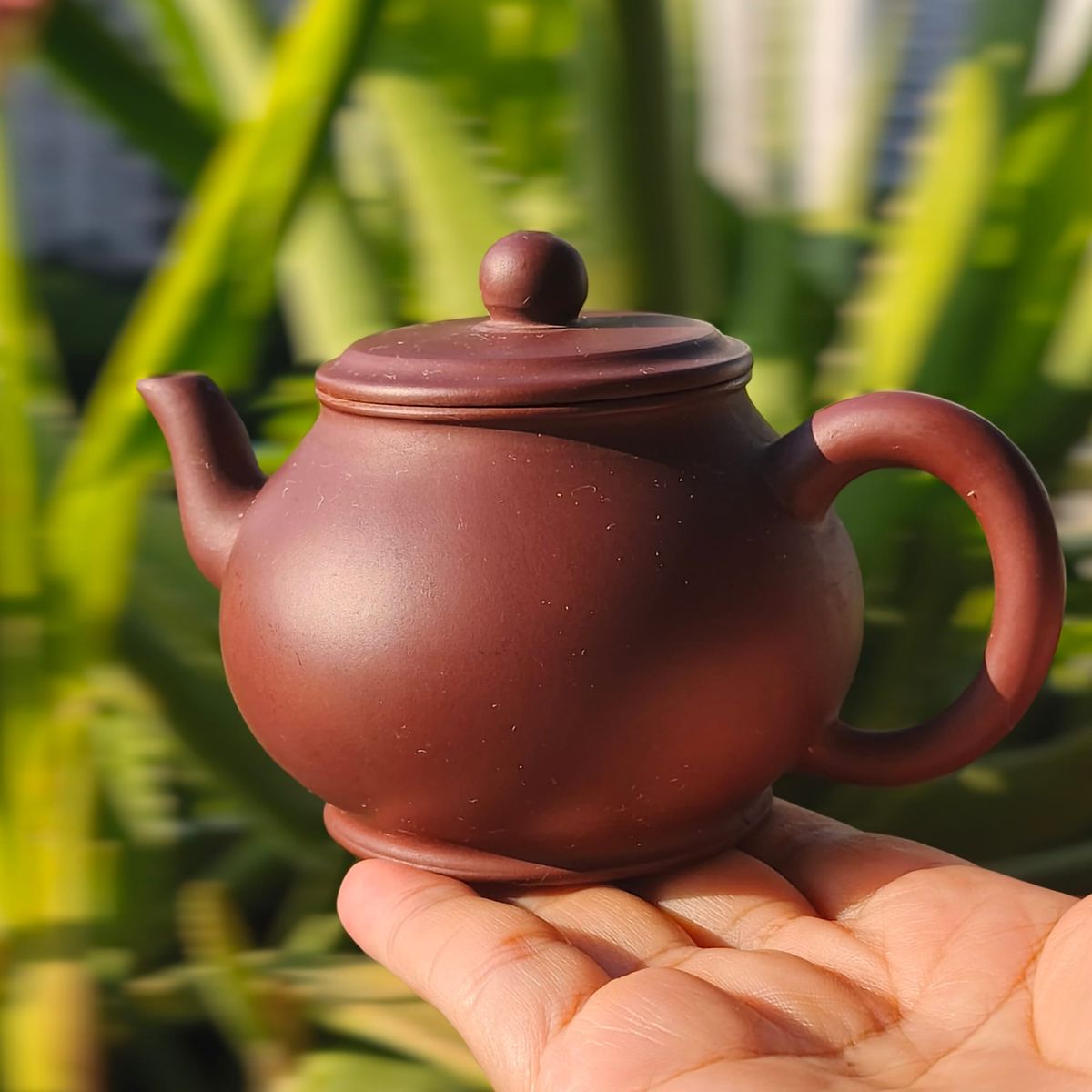
- The Mengchen Zisha Pot (孟臣罐): A tiny, high-iron clay teapot (typically under 100ml) engineered to lock in maximum heat.
- The Ruochen Pure White Cups (若琛杯): Micro-sized, paper-thin white porcelain cups designed for immediate heat absorption and clear liquor observation.
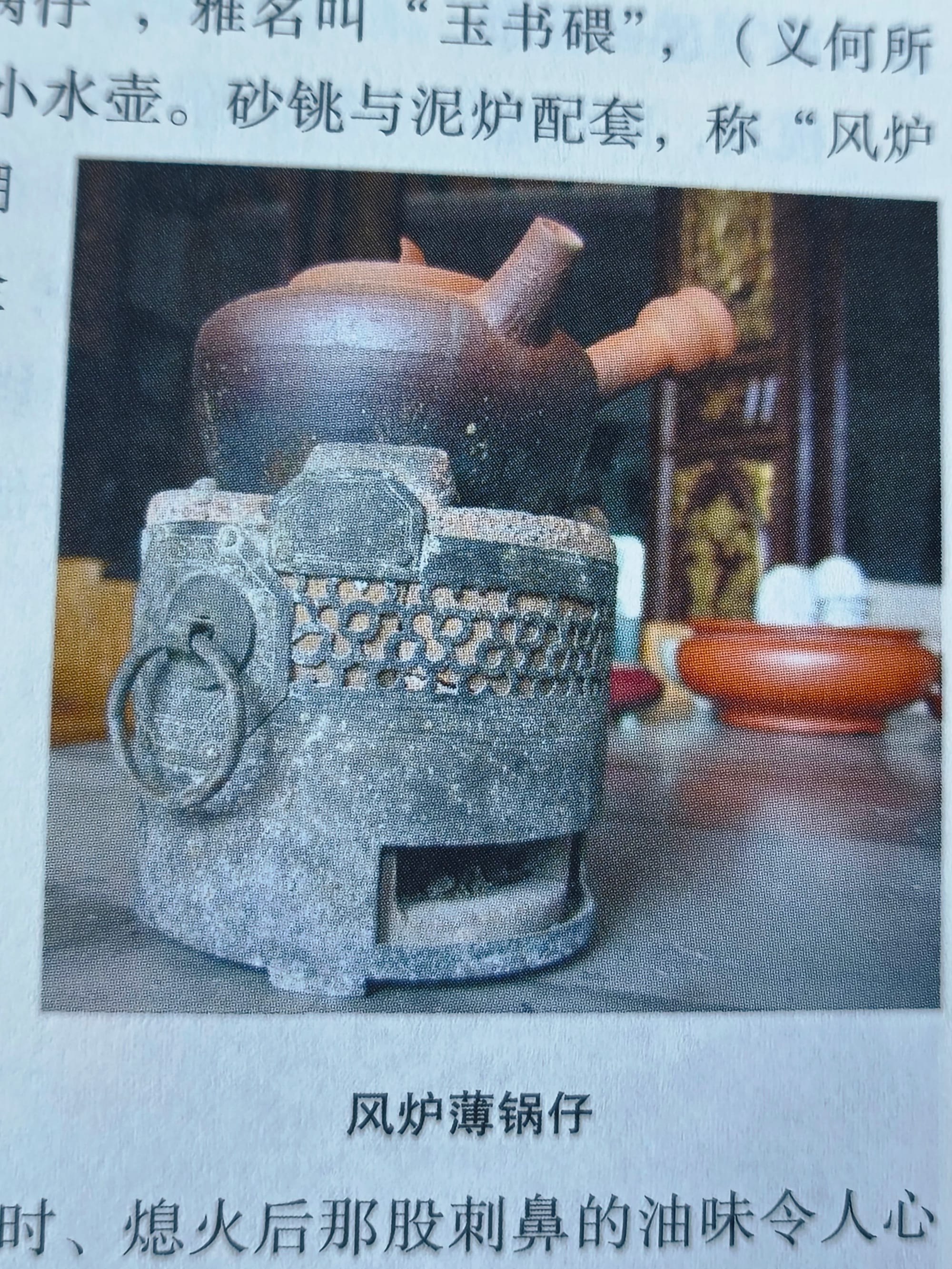
In modern tea spaces, practical adaptations are common and completely acceptable. Traditional charcoal stoves and clay kettles are frequently replaced by electric ceramic or Zisha heaters for indoor convenience, and versatile porcelain Gaiwans are widely used instead of clay pots.
However, preserving the structural meaning of the practice requires keeping its boundaries clear. Strict traditional contexts avoid the fairness pitcher because its presence completely alters the technical purpose of the distribution steps. True Gongfu Cha remains fiercely focused on semi-oxidized, heavily fired oolong teas—like Phoenix Dancong or Wuyi Rock Tea—where maximum heat retention is a requirement. It was never meant to be a universal method applied blindly to all tea types.
Practical Realities: The Ubiquitous Pitcher vs. Regional Logic
If traditional Gongfu Cha is so explicitly not using the fairness pitcher, why does it dominate Chinese tea visual spaces?
The answer lies simply in the fact that oolong tea drinking and Gongfu Cha brewing do not dominate tea drinking in China. In domestic consumption realities: green tea overwhelmingly dominates China’s domestic market, commanding over 60% of total consumption, while oolong accounts for only about 10%. Naturally, because the vast majority of people across China brew green tea daily, the fairness pitcher is their essential and staple. Crucially, brewing green tea with a fairness pitcher is not an act of Gongfu Cha. They are entirely different historical and technical systems.
Green tea is most popular in the Jiangnan region—encompassing Anhui, Jiangsu, and Zhejiang provinces. While Jiangnan is firmly part of Southern China (south of the Yangtze River), its tea paradigm is technically independent from the deep south of Guangdong. Here, delicate green teas are brewed at lower temperatures, between 60°C and 85°C, to preserve sweet amino acids.
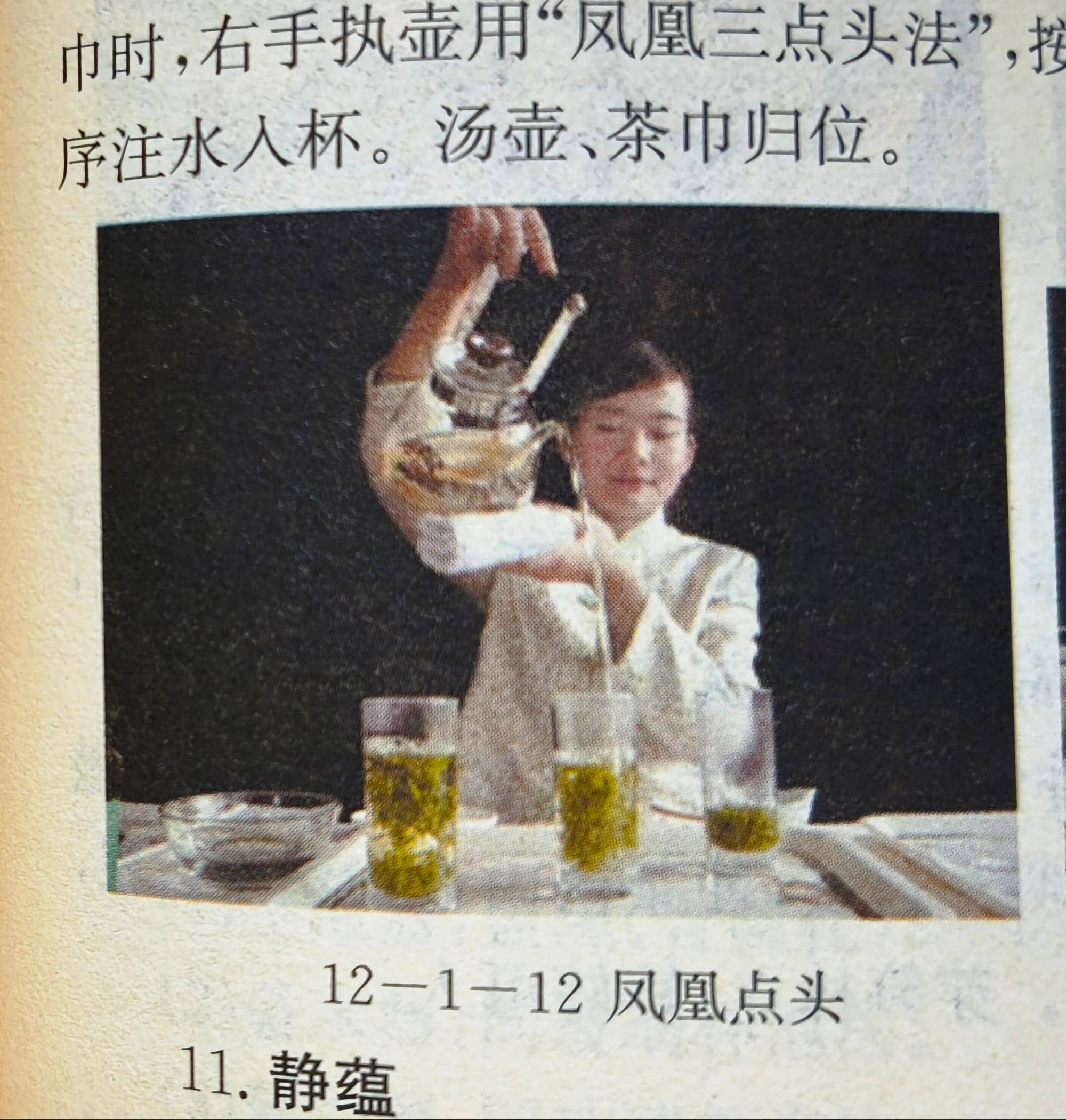
This is where the famous "Three Nods of the Phoenix" (鳳凰三點頭) technique actually belongs. By gently raising and lowering the kettle three times, the brewer creates a soft, undulating underwater vortex. This technique happens in a teapot, a gaiwan, and is especially and frequently performed when brewing directly in a tall glass. It allows the drinker to fully observe and appreciate the delicate buds as they spiral and stand upright. The fluid mechanics here are the exact opposite of Gongfu Cha: avoid moving the centre of the leaves in pouring.
Once you separate green tea from Gongfu Cha, you realize Chinese tea culture fluidly adapts its tools to the nature of the leaf. When you leave the southeast part of China—which is dominated by the smaller, delicate Camellia sinensis var. sinensis leaves—and travel to the southwest, you enter a completely different botanical landscape.
Yunnan is the homeland of Camellia sinensis var. assamica, a robust, large-leaf varietal packed with significantly higher concentrations of bitter polyphenols and caffeine. Historically, Yunnan’s indigenous tea culture is defined entirely by Sheng Pu'er (生普 - Raw Pu'er); for centuries, before modern accelerated fermentation was invented, sun-dried raw tea was the only form that existed. To handle the aggressive, biting bitterness of these young, un-aged assamica leaves, local ethnic groups developed ancient, rugged Kao Cha (烤茶 - Roasted Clay-Pot Tea) traditions. These regional methods were collectively inscribed into UNESCO's Representative List of Intangible Cultural Heritage in 2022 under China's unified traditional tea framework:
- Dali Bai Ethnic Group's Three-Course Tea (白族三道茶): This ritual explicitly involves three distinct brews. The vital first course ("Bitter Tea") is a standard Thunder-Roar Tea (Lei Xiang Cha 雷響茶), where raw Sheng Pu'er leaves are shaken and dry-roasted in a clay pot over open embers until golden-brown and fragrant, then flashed with boiling water to break down the harsh bitterness. This is followed by the second and third brews, which are often infused with brown sugar, honey, walnuts, and spices.
- Mount Jingmai Blang Ethnic Group's Fire-Hearth Roasted Tea (景邁山布朗族火塘烤茶): As a classic archetype of Yunnan’s roasting traditions, this everyday practice takes place around the central family fire-hearth. Sun-dried Sheng Pu'er leaves are placed inside a dedicated clay pot and slowly baked over the flames, constantly shaken until the intense heat alters the leaf chemistry. This dry-roasting breaks down the volatile, astringent tastes and converts them into a deeply sweet, warming, and highly aromatic liquor.
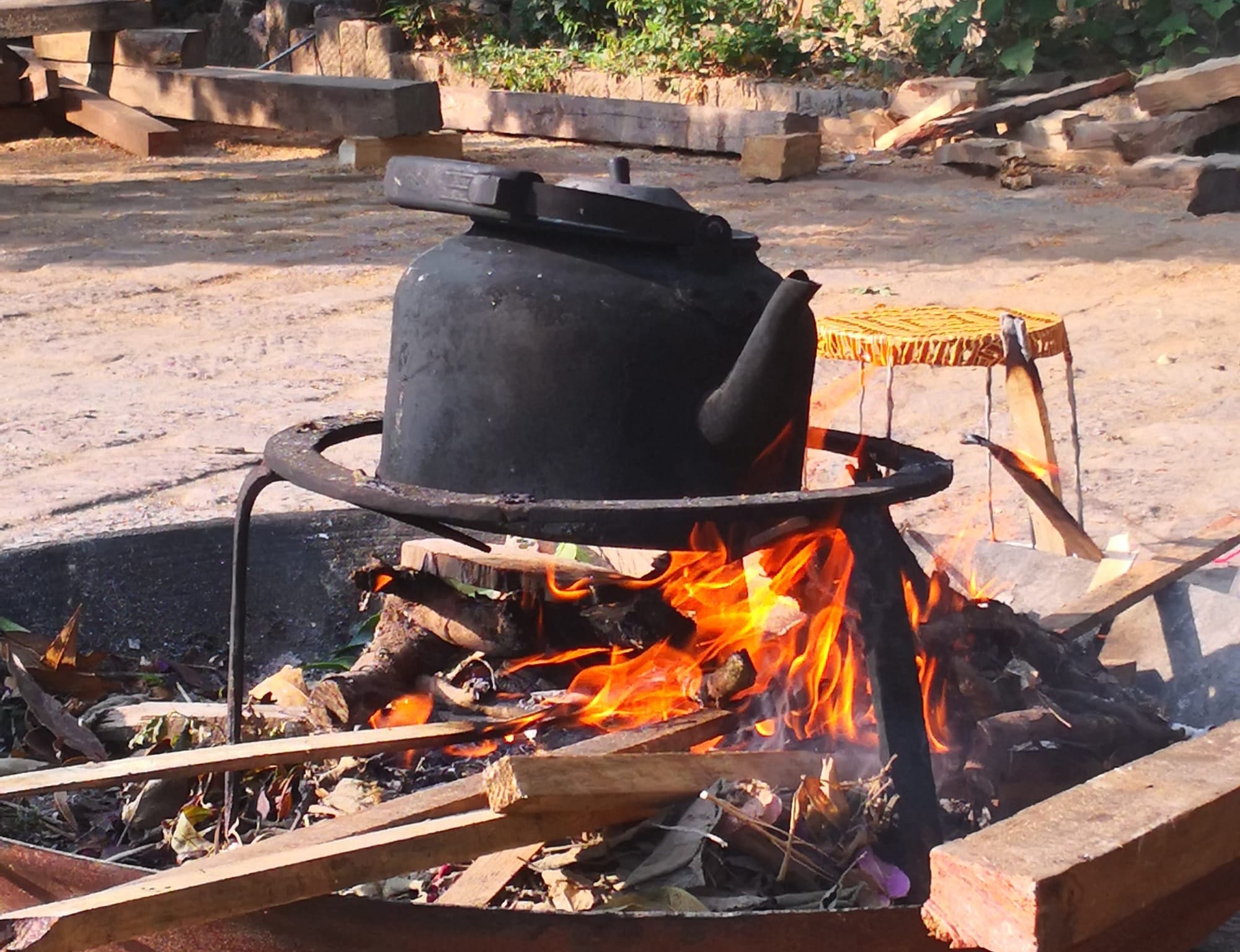
Every single one of these diverse regional methods exists because Chinese tea culture is, at its core, deeply practical, functional, and reasonable. Nothing is done purely for show. All of these skills stem from a profound realization of how a specific tea leaf best links to taste through regional wisdom. Because different cultivars do not grow or process the same way, their brewing requirements must naturally adapt.
The Comparative Architecture of Chinese Leaf-Water Contact
When we map these three distinct traditions by their technical variables, we see how the choice of tools and skills directly serves the ultimate target in the cup:
| Style Name | Tea Leaf Specialty | Water Features | Tool Significance & Setup | Skills Involved | Ultimate Taste Target |
|---|---|---|---|---|---|
| Chaozhou Gongfu Cha | High-aroma, heavily roasted or semi-oxidized Oolongs (e.g., Phoenix Dancong) | High temperature, maximum thermal retention | Micro-clay pots (<100ml) to lock in heat. Strictly 3 cups by historical record. Fairness pitcher is fundamentally unacceptable due to direct distribution rules. | Strategic leaf layering (Na Cha) to prevent spout choking; rapid, low-altitude circular direct pouring. | High-intensity aroma, concentrated body thickness, and immediate return sweetness (Huigan). |
| Jiangnan Brewing* | Delicate, unoxidized green teas (e.g., Longjing, Biluochun) | Low water temperature (60°C–85°C) for a gentle, floating extraction | Prefer glass or porcelain. Clay or Zisha traps heat and absorbs delicate notes; green tea requires rapid cooling and zero aroma absorption. The fairness pitcher is an absolute must-have staple for casual sharing. | Edge pouring along the wall; "Three Nods of the Phoenix" (鳳凰三點頭) to prevent localized "hot spots" from cooking tender buds and creating bitterness, making water wrap around every leaf for a perfectly balanced, uniform extraction. | Prominent sweet amino acids, crisp refreshing profiles, and minimized bitterness or astringency. |
| Yunnan Kao Cha | Robust, highly bitter large-leaf sun-dried Sheng Pu'er (var. assamica) | Flash boiling water poured directly onto intensely heated, dry leaves | Strictly clay pots—no other material can withstand the direct ember dry-roasting phase. Fairness pitchers are utilized to serve larger gatherings around the hearth. | Constant, synchronized pot shaking over open fire embers to evenly pyrolyze leaf chemistry before adding water. | Total conversion of aggressive, raw astringency into a deeply sweet, warming, and highly aromatic liquor. |
*Editorial Note on Nomenclature: "Jiangnan Brewing" is not an official historical or standardized technical term. It is used contextually within this article to cleanly distinguish the open-vessel, pitcher-reliant paradigm from highly regionalized methods like Gongfu Cha or Kao Cha. While a sharing setup with a fairness pitcher can fluidly accommodate any tea type, its functional mechanics are most universally and historically expressed through China's green tea traditions.
The Liberation of Control: Timing and the Birth of the Gaiwan
Once you realize there is no singular ritual—only dynamic problem-solving—you gain the freedom to analyze your tools purely by how to manage your brew with leaves and water, so as to realize the tools and skills needed.
But that is not enough. You might reckon already that time is incredibly important in brewing Chinese tea, and it is this exact obsession with precision timing that creates its most relevant tool: the gaiwan.
To understand why time demands the gaiwan, we have to look at the instrument it so frequently replaces. When evaluated purely on extraction timing, the traditional teapot reveals its core mechanical limitation: the drain is sluggish.
A teapot, by its very architecture, features a restricted spout that creates a physical fluid bottleneck. Depending on the design, the filter style, and how the leaves expand inside, a teapot can take anywhere from 10 to 15 seconds to fully empty its water volume. During those unmanaged seconds, the water remains in active, ongoing contact with the leaves. The brewer effectively loses absolute control over the extraction window; the tea continues to steep past its intentional deadline while trapped inside the vessel.
To solve the problem of the sluggish drain, the porcelain gaiwan became indispensable.
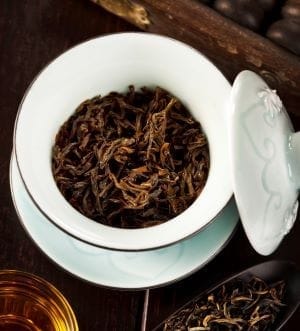
The gaiwan is a tool built for pure fluid velocity. Because its wide, movable lid can be adjusted to create a pouring aperture of any size, it allows for an instantaneous flash pour. The moment your extraction hits the exact second required, the gaiwan separates the water from the leaf instantly, halting the brew on a dime.
https://www.instagram.com/reel/DJMgM6mPNE-/?utm_source=ig_web_copy_link&igsh=MzRlODBiNWFlZA==
Furthermore, high-quality porcelain is completely non-porous and neutral. It acts as a diagnostic mirror, absorbing nothing and reflecting the unvarnished reality of the leaf-water contact. You do not choose the gaiwan to perform a performance; you choose it because it offers the ultimate mechanical liberty to control time.
Conclusion: The Social Practice and Cultural Essence
This technical reality brings us to a quiet, grounded perspective on the true nature of Chinese tea heritage. When UNESCO inscribed "Traditional tea processing techniques and associated social practices in China," the defining emphasis was placed not lightly on social practices rather than an pursuit of "ultimate beauty."
In the modern visual landscape, tea brewing is often romanticized as a rigid, theatrical choreography designed solely for an audience. But in reality, brewing tea was never meant to be a mere performance. In China, tea is deeply rooted in daily mindfulness—an individual practice of drinking alone to clear the mind. People personally love and live with tea first.
When tea is served to guests, it is not an act of empty courtesy or formal gesture; it is the act of sharing a deeply personal sensory experience that the host has cultivated and loved from experience. We communicate with guests and friends across the table, but we communicate with the leaves from nature first.
This is why these traditions remain fiercely alive across generations without ever feeling like an archaic museum piece or a historical reenactment. In places like Chaozhou, the younger generations do not approach it as a vintage hobby or a rigid performance; they were brought up seeing their parents brew Gongfu Cha at home daily. They absorb, understand, and enjoy it naturally as an effortless, vibrant extension of their contemporary identity.
The cultural essence of Chinese tea lies far beyond the theater of presentation. True mastery is entirely practical and deeply internal. It is the clarity to look at the unique leaf in front of you, understand its environment, and confidently choose the right tool to unlock its truest sensory story.
What tools are currently sitting on your tea table out of pure habit rather than technical necessity? Let’s talk about extraction logic below.